




ASTER’s price has fallen nearly 70% from its post-launch high, reflecting waning hype and mounting criticism. User activity and trading volumes appear to have collapsed even faster, raising questions about its recovery.
However, under this weakness, technical patterns and whale accumulation show a different situation. These signals suggest that despite the sharp decline in participation, Aster may still attempt a major breakout.
Aster sees user activity and trading volumes collapse after post-launch frenzy
ASTER (formerly Astherus) has experienced a dramatic collapse in user participation since its token launch in September 2025.
Daily active addresses interacting with Astherus Vault on the BNB chain peaked at 29,062 on September 24th. As of February 19, that number had fallen to just 146. This represents a 99.5% decrease in daily active users.
Disclaimer: These numbers specifically reflect Astherus Vault deposit and withdrawal activity on the BNB chain. Aster operates on BNB Chain, Ethereum, Solana, and Arbitrum, and the total trader activity across the platform, including perpetual and spot trades, can be significantly higher than what Vault-only metrics would suggest.
Trading activity is following a similar trend. According to data obtained via Dune, daily decentralized trading volume on the BNB chain has fallen from a peak of $327.75 million to just $17.31 million.
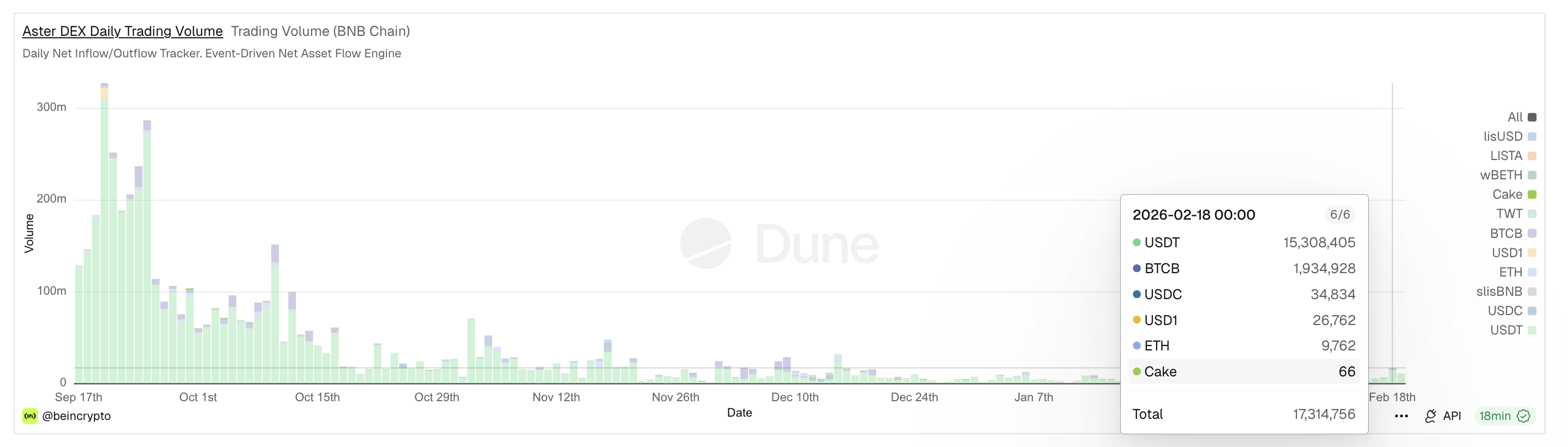
This means trading volume has decreased by 94.7%. On-chain transaction volume reflects the actual buying and selling that takes place on the blockchain. A sharp drop indicates declining participation and weak demand.
This crash coincides with a decline in the price of aster. The token is down about 70% from its all-time high of $2.41, which it reached shortly after its launch. This decline reflects the end of a possible hype phase.
However, the picture is more complex. The cumulative unique addresses interacting with the protocol continued to grow, reaching 572,252. This shows that new users are still entering the ecosystem even though daily activity is decreasing.
More importantly, the remaining users are putting in a lot of money. On February 19th, total deposits from just 146 wallets reached $11.8 million. This equates to an average of approximately $80,000 per wallet. This shows that while individual participation has declined, high-value investors remain active.
Furthermore, since TGE, daily withdrawals from the vault have remained consistently zero, indicating that fewer users are depositing new capital while existing capital is not leaving the system.
Bullish divergence and EMA setup signals early reversal
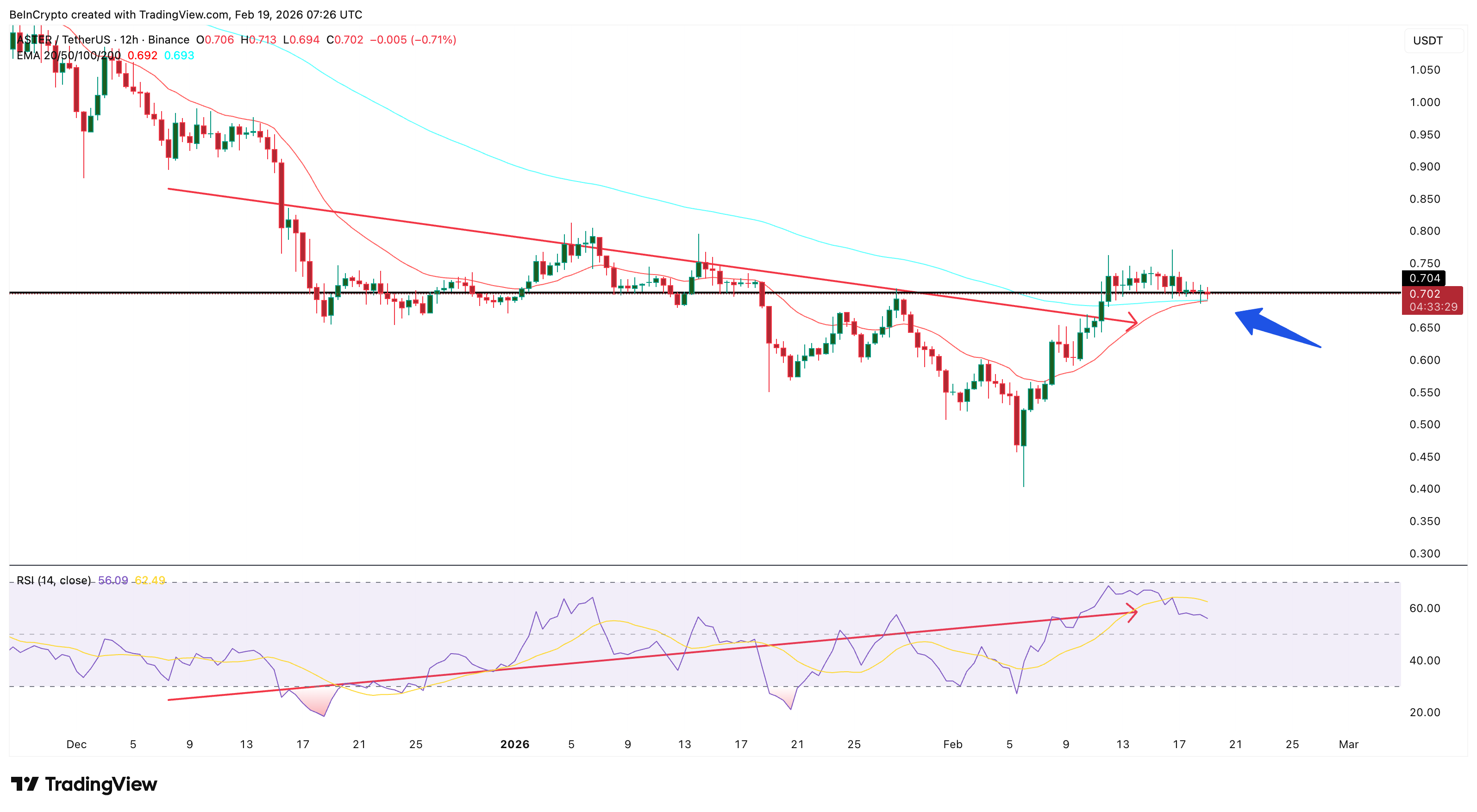
Despite the fundamental weakness, technical indicators are showing early signs of recovery. On the 12-hour chart, ASTER formed a bullish divergence from December 7th to February 14th. During this period, prices hit lows. However, the relative strength index (RSI) was even lower.
RSI measures buying and selling strength on a scale of 0 to 100. If the RSI is rising while the price is falling, it indicates that selling pressure is easing. This pattern is often seen before a price recovery begins. Aster has not yet fully responded to this signal. This suggests that bullish pressure may still be building.
At the same time, the 20-period exponential moving average (EMA) is approaching a bullish crossover above the 100-period EMA. EMA tracks average prices over time and gives more weight to recent prices. A breakout of the short EMA above the long EMA indicates strengthening momentum and a possible trend reversal.
Prices are also forming an inverse head-and-shoulders pattern.
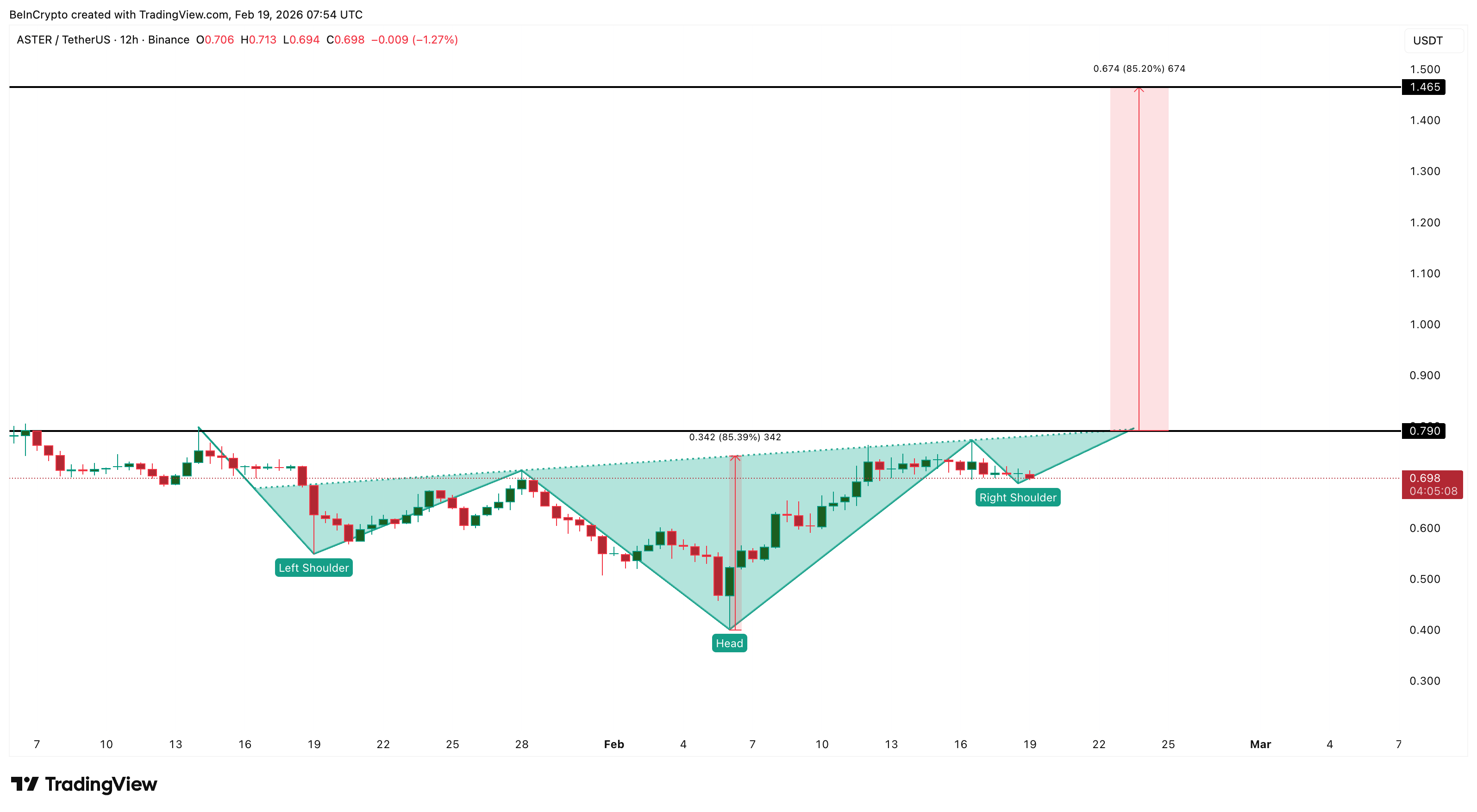
This is a bullish reversal structure that indicates buyers are gradually taking control. The neckline for this pattern is around $0.79. If it breaks above this level, recovery will be confirmed.
Whale accumulation and emotional collapse create opposition forces
Despite the downturn in public opinion, large investors continue to accumulate assets in ASTER. Wallets holding between 100 million and 1 billion ASTER have increased their holdings from 2.75 billion ASTER to 2.96 billion ASTER since early February. This steady increase shows strong confidence from the largest holders.
Medium-sized whales, which have between 1 million and 10 million ASTER, also increased their stock from 262.48 million to 278.96 million.
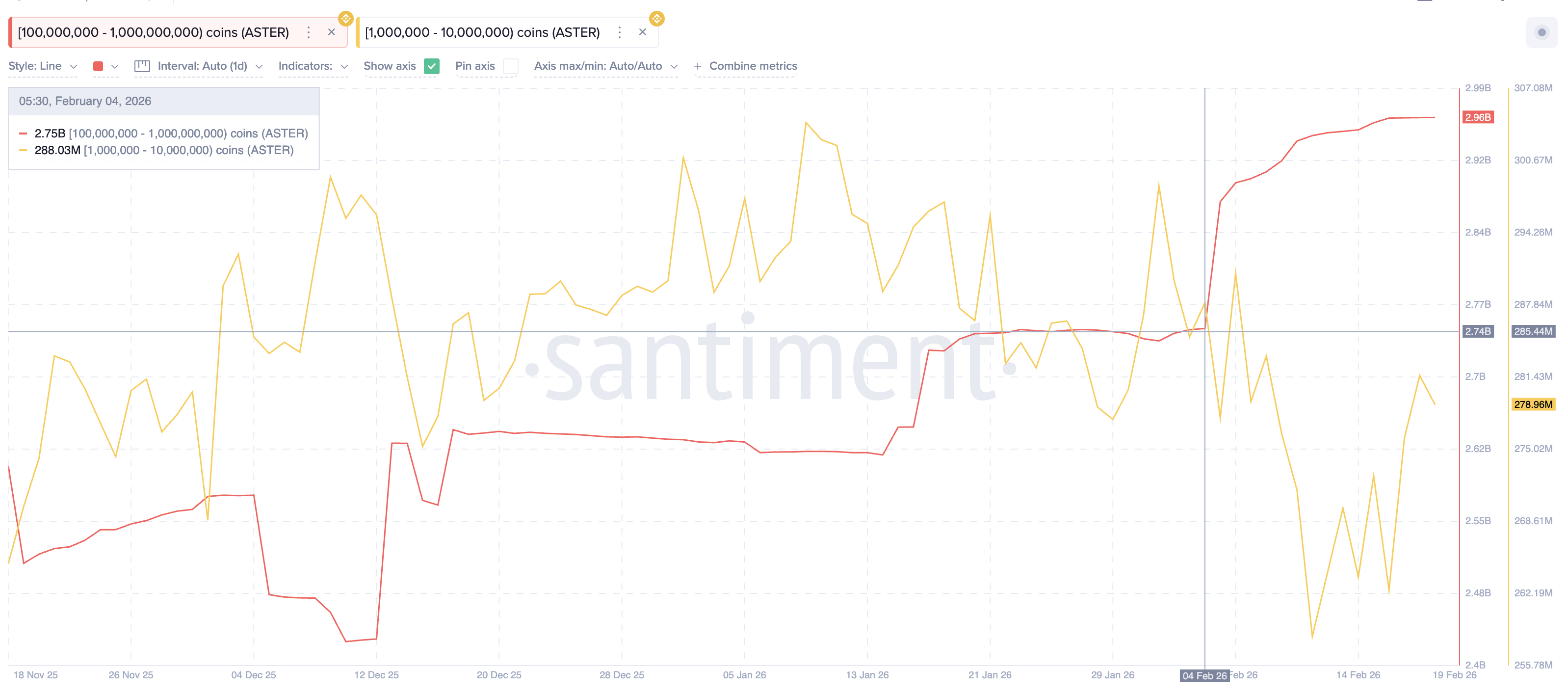
However, some of these small whales have recently begun to reduce their positions slightly. This decline appears to be related to the recent collapse in positive sentiment.
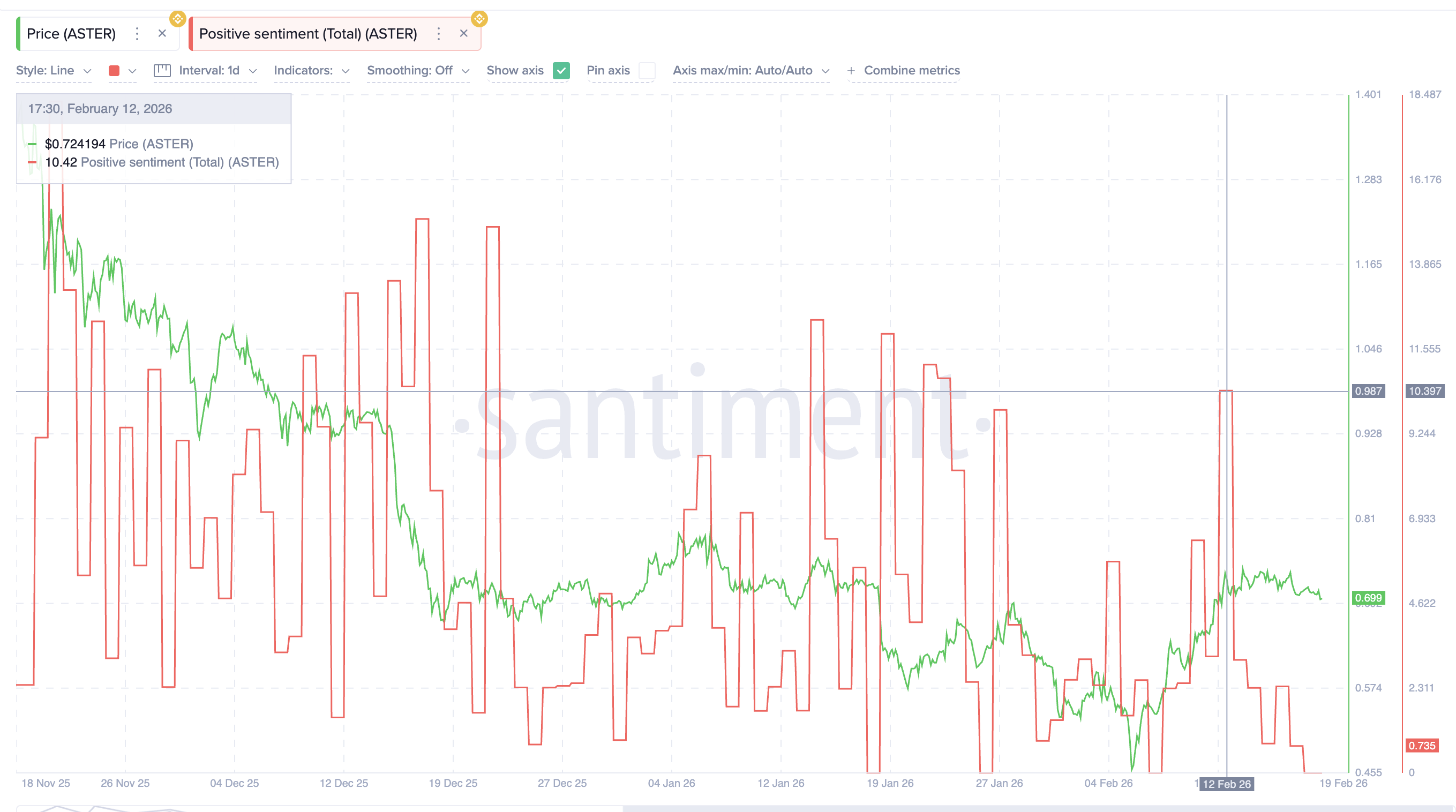
Market sentiment plummeted. The positive sentiment score has recently fallen from 10.39 on February 12th to near zero.
Want more token insights like this? Sign up for Editor Harsh Notariya’s Daily Crypto Newsletter here.
This reflects the growing criticism and negative perception of the decline of Astor’s activities, and although based on the available data this seems somewhat exaggerated, it is not completely unfounded.
This creates conflict in the market. Large whales continue to accumulate, demonstrating long-term confidence. However, small investors are becoming cautious as sentiment weakens. This disconnect between whale behavior and public sentiment often appears near major tipping points.
ASTER Price Level Could Cause 85% Breakout
ASTER prices are currently close to technically important levels. The reverse head and shoulders pattern neckline is available for $0.79. A break above this level will ensure a bullish reversal. If this breakout occurs, the next resistance levels will appear at $0.92, $1.06, and $1.29. The perfect breakout target lies around $1.46. This would be an 85% increase from current levels.
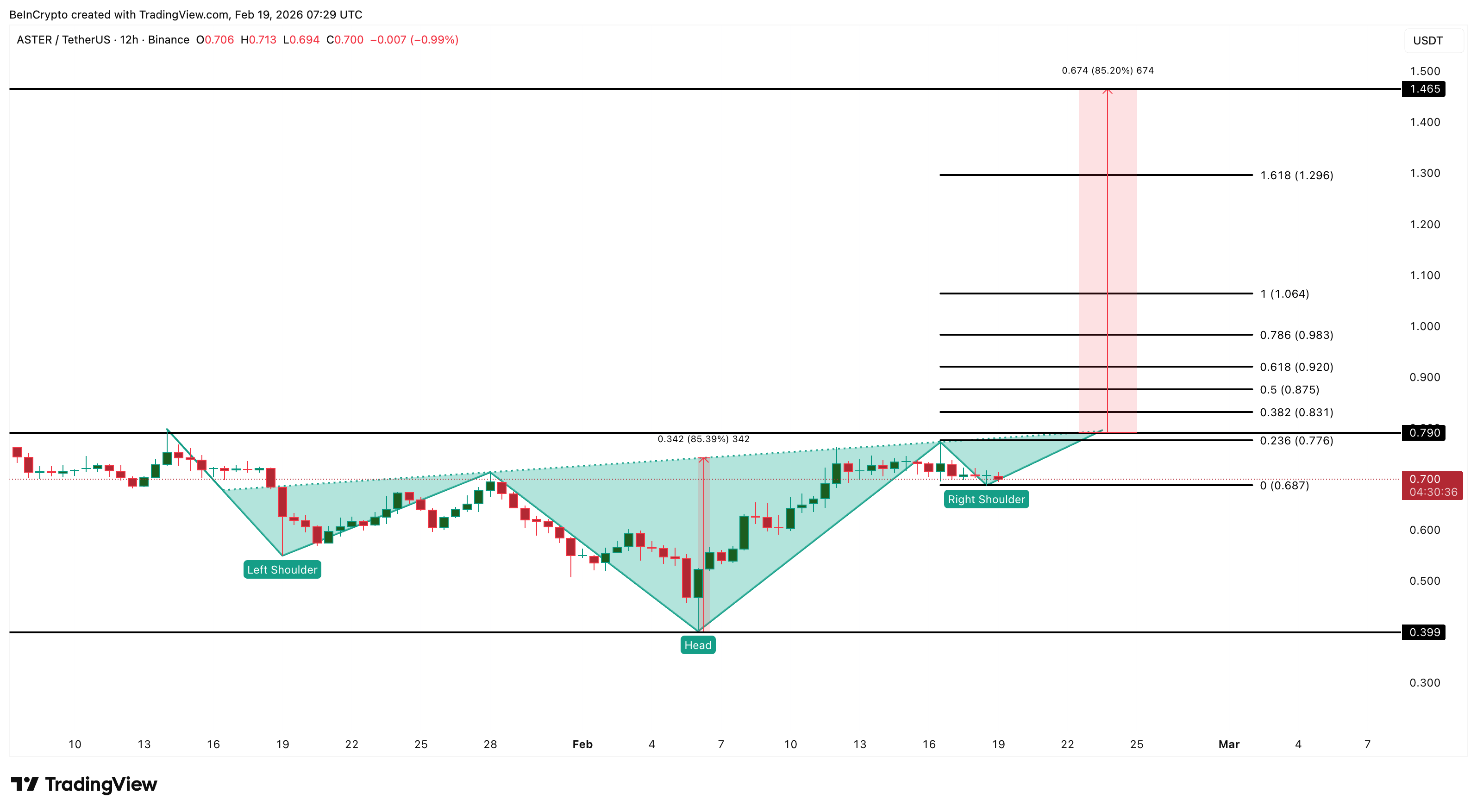
However, downside risks still exist. The bullish setup will weaken if Aster breaks below $0.68. A further decline below $0.39 will completely invalidate the pattern and confirm the continuation of bearish pressure.
For now, Astor remains at a tipping point. User activity and sentiment collapsed precipitously. However, whale accumulation, bullish divergence, and reversal patterns suggest that a recovery is still possible. The next move above $0.79 or below $0.39 will likely determine Aster’s long-term direction.
