




Bull Score, a key on-chain metric used to assess Bitcoin’s upside potential, plummeted to zero out of 10 points. This is the first time the score has reached zero since January 2022, which preceded the last major bear market.
Data from on-chain analytics platform CryptoQuant showed that the Bullscore indicator hit zero on Thursday. Analysts warned that immediate action was needed to avoid a prolonged recession.
Sponsored Sponsored
Bullish score suggests a move towards consolidation
BullScore is a composite indicator designed to assess market health and trends by integrating 10 different on-chain and market indicators across four major categories. This includes network activity, trading volume, investor profitability, and market liquidity.
Typically, a score below 40 is interpreted as a bear market signal, and a score above 60 is interpreted as a bull market signal.
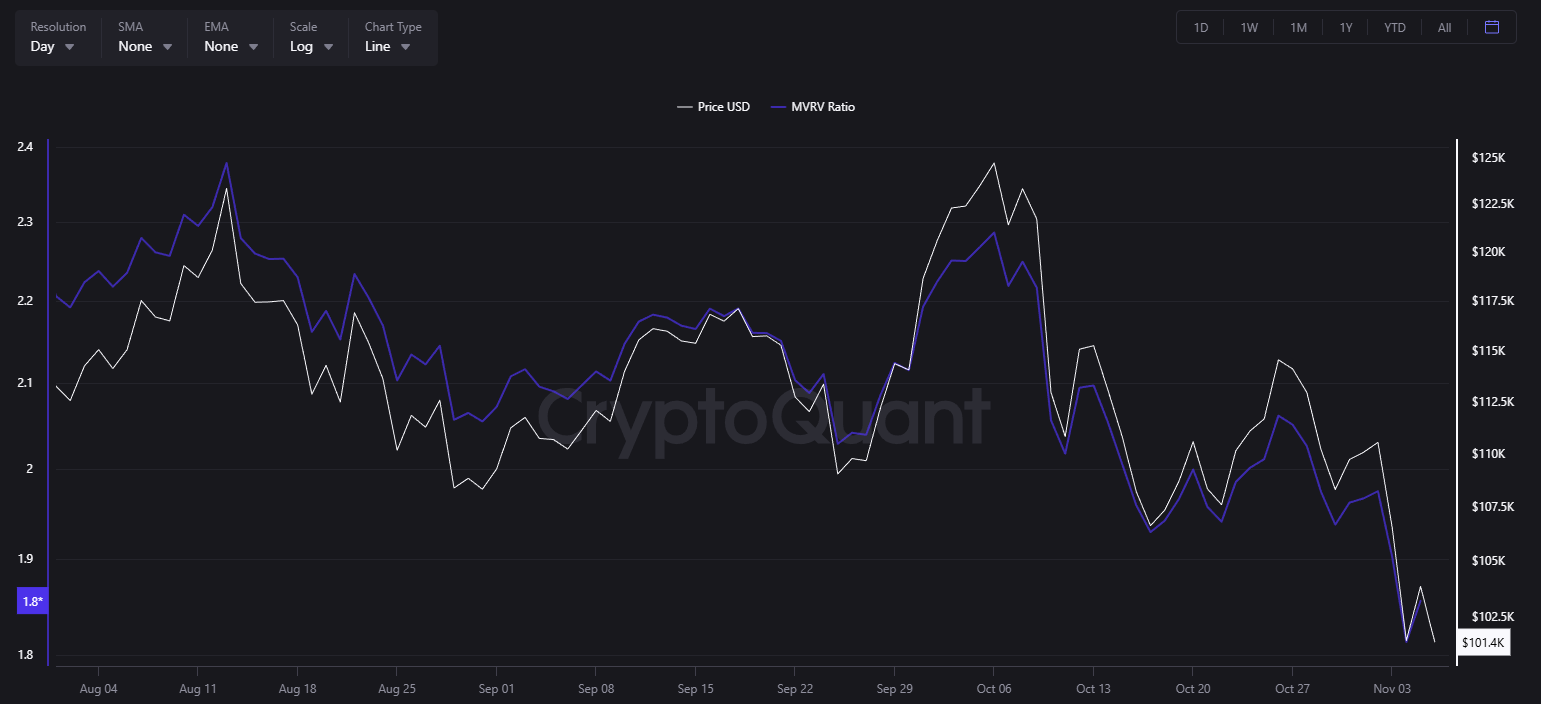
As of November, all 10 on-chain components of this metric are below trend. Most notably, the MVRV (market value to realized value) and liquidity of stablecoins on the Bitcoin network have fallen dramatically over the past month.
When Bitcoin’s MVRV ratio decreases, it usually indicates a decline in profitability for investors. Depending on the situation, it could indicate potential undervaluation or a buyer re-entry zone.
A decline in MVRV means the market value is moving closer to or below the holder’s average cost basis. Simply put, investors’ unrealized gains and even losses are reduced.
Although the score remained extremely low throughout the 2022 bear market, the current situation is structurally different given that Bitcoin remains at historic highs near $100,000.
Nevertheless, why are the indicators showing such results? It’s because inflows from ETFs and companies have slowed.
Overall, it is clear that new demand needs to materialize for a sustained bull market to occur. Analysts say the current regime looks like the early stages of a bear market.
