




Aave is considering sharing a portion of off-platform revenue with AAVE token holders, plans to submit a formal proposal to the community, and is preparing for a large-scale governance vote.
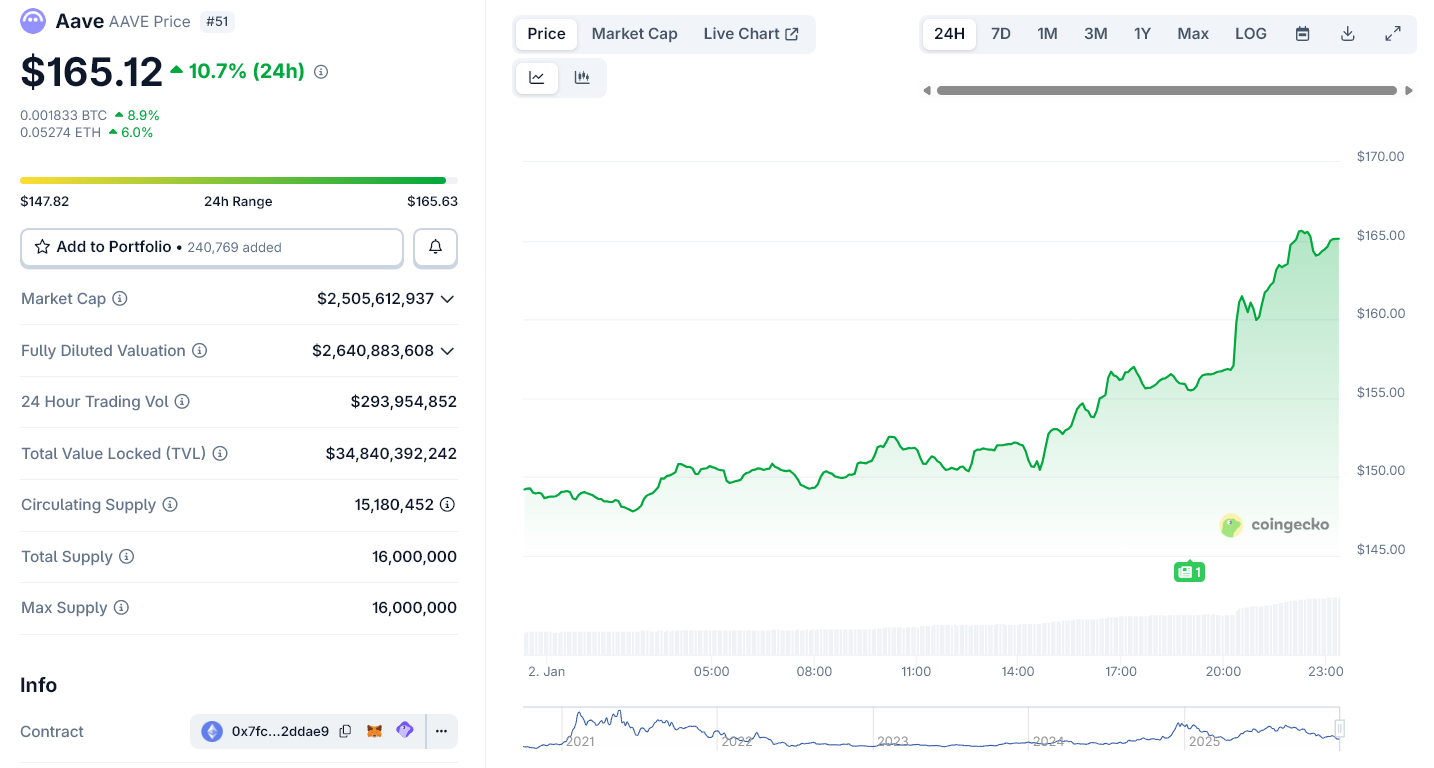
This update, posted on January 2, 2025, immediately boosted market sentiment. AAVE rose more than 10% on the day as traders reacted to signs of improved cooperation between the development team and the DAO.
Sponsored Sponsored
Contents of the new Aave proposal
According to Aave Labs’ founders, the next proposal will explain how revenue earned outside of the core lending protocol can be shared with AAVE holders.
This revenue typically comes from the official Aave app, front-end swap integrations, and future consumer or institutional products built on top of Aave.
It also includes safeguards to protect Aave DAO and prevent sudden changes that could harm token holders.
Another key focus is control of the Aave brand and user gateway. This includes websites, domains, and social media accounts that act as the public face of Aave.
The proposal will outline who will own these assets, how they will be used, and the restrictions on monetizing them without DAO approval.
The proposal will also shape Aave’s long-term direction. Aave Labs argues that the protocol needs to grow beyond cryptocurrency-only lending and move into real-world assets, consumer products, and institutional use cases.
Sponsored Sponsored
These efforts will depend on future upgrades such as Aave V4 and the expanded use of Aave’s stablecoin, GHO.
Why is this important for DAOs?
The move follows weeks of public disagreement within the Aave ecosystem.
Some participants recently accused Aave Labs of having too much control over its revenue sources and communication channels. They warned that uncertainty over governance and ownership has contributed to AAVE’s market value plummeting in recent weeks.
In response, DAO representatives welcomed the change in tone, but stressed that clear and enforceable commitments are essential. They said vague promises were not enough and called for precise rules covering ownership, revenue sharing and accountability.
Future DAO votes will determine whether this new framework moves forward.
If approved, it could ease tensions within the company and reset the way Aave balances growth and governance. If not, the debate over control and coordination is likely to continue.
