




Internet Computer (ICP) has surged more than 39% over the past week, outperforming major cryptocurrencies as investors react to the newly released MISSION 70 white paper.
The document proposes comprehensive updates to reduce inflation by at least 70% by the end of 2026. This will be achieved through a combination of demand-side acceleration and supply-side reductions.
Sponsored Sponsored
Internet computers lead the way in daily growth
ICP has emerged as an outstanding performer in the cryptocurrency market. According to data from CoinGecko, ICP has gained nearly 26% in the past 24 hours, placing the token at the top of the daily leaderboard among the top 100 cryptocurrencies.
The rally forms part of a broader upward momentum that began earlier this week. Altcoins entered 2026 largely in lockstep with the broader crypto market, experiencing an initial modest rise followed by a short period of decline.
However, this week the momentum reversed again. Major assets such as Bitcoin (BTC) and Ethereum (ETH) have resumed their rise, restoring optimism to the overall market.
While this positive sentiment supported ICP’s price movement, developments within the Internet Computer ecosystem may also have contributed to the upside, strengthening investor confidence in the network’s inherent fundamentals.
“Internet Computers led large-cap assets with a +39% increase in market capitalization over the past week,” Santiment wrote.
Sponsored Sponsored
Mission 70 whitepaper outlines two strategies to reduce ICP token inflation
The DFINITY team published the MISSION70 whitepaper on January 13, 2026. This paper details two approaches to reducing ICP inflation. The strategy combines supply and demand side actions and aims to reduce overall token inflation by 70% by the end of the year.
Supply-side reforms account for 44% of total reductions. These changes include lowering voting rewards, node provider rewards, capping reward pools, and introducing a simpler maturity adjustment mechanism.
The white paper argues that current node provider fees significantly exceed underlying infrastructure costs and there is scope for reductions without compromising network security.
“We estimate that the supply-side measures will reduce ICP minting from 9.72% (January 2026) to 5.42% (January 2027), a reduction of 44%. DFINITY believes that the combination of these supply-side measures and demand acceleration will achieve the Mission 70 goal of reducing inflation by 70%,” the paper reads.
For the remaining 26%, increased network activity is essential. DFINITY plans to expand demand with AI-powered on-chain applications and new cloud engine products.
Sponsored Sponsored
The paper predicts that as usage increases, computational charges will consume more ICP, potentially creating deflationary pressures.
“Achieving Mission 70’s overall inflation reduction target of 70% (from 9.72% to 2.92%) would require an additional 26% demand effect beyond the 44% reduction from supply-side measures. At current price levels, this would require increasing the cycle burn rate from the current 0.05XDR/s to 0.77XDR/s,” the team added.
Market reaction and on-chain data show strong confidence
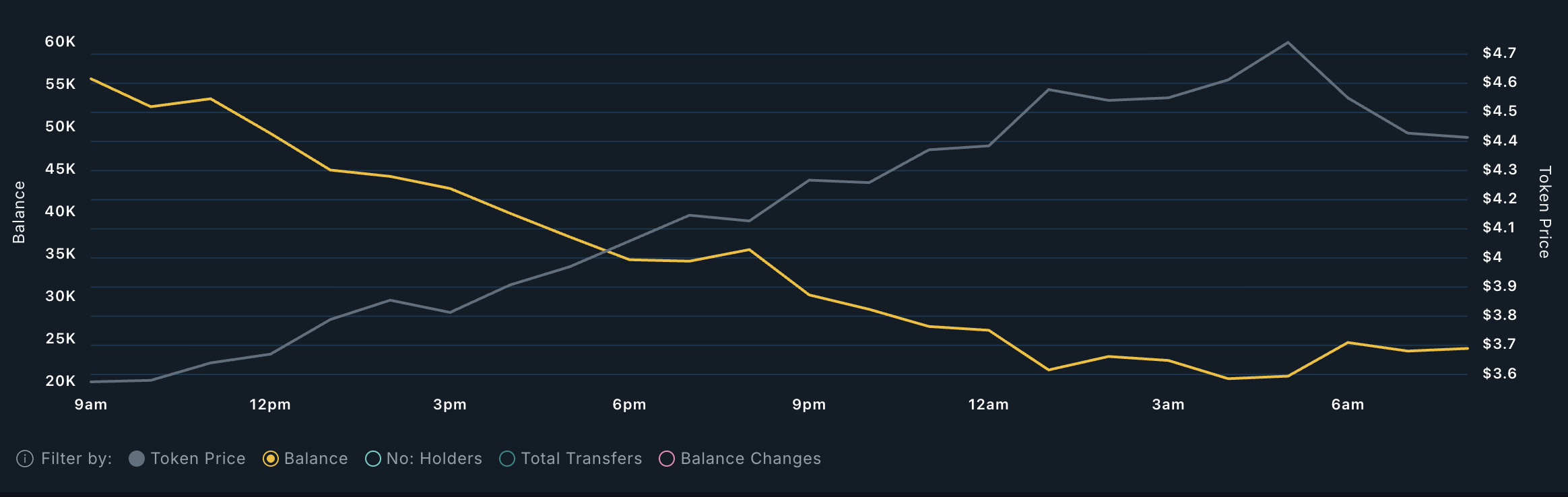
Meanwhile, ICP’s price increase was matched by notable on-chain activity. According to Nansen data, ICP exchange balances have declined by more than 58% in the past 24 hours.
Sponsored Sponsored
Such sudden outflows usually indicate that holders are moving their tokens off the exchange, and this trend is generally associated with a reduction in short-term selling pressure.
Network usage is also increasing. According to Chainspect, Internet computers processed about 90 million transactions a day, marking the network’s highest daily activity in more than a month.
From a technical perspective, analysts remain positive on ICP’s outlook. Some have pointed to similarities with the November 2025 price structure, suggesting the asset could attempt a similar rally if momentum holds.
As Internet computing enters this critical period, the cryptocurrency market will be watching to see if DFINITY can achieve this economic revolution. It remains to be seen whether the rise in prices signals permanent change or is a reaction to expected developments.
