




Sandbox (SAND) is a blockchain-based metaverse platform that allows users to create, own, and monetize digital assets. SAND posted a 60% price increase in January, even as the overall market corrected and anxiety returned.
In the next article, we will look at factors that represent both opportunities and risks for SAND traders in January.
sponsored
What are the factors driving SAND price in January?
Sandbox (SAND) is trading above $0.17, up over 60% since the beginning of the year. Its upward momentum is very similar to the recent rally seen in Axie Infinity (AXS).
According to the data, Upbit traders have been one of the main drivers of this surge.
SAND trading volume on Upbit accounts for over 23% of the total trading volume. Upbit’s price is also trading at a premium compared to other exchanges. AXS also suffered a similar Upbit-driven impact, pushing its price more than threefold in January.
Korean investors appear to be showing renewed interest in gaming themes. Artemis data shows that the gaming sector has led the overall market performance since the beginning of the year.
sponsored
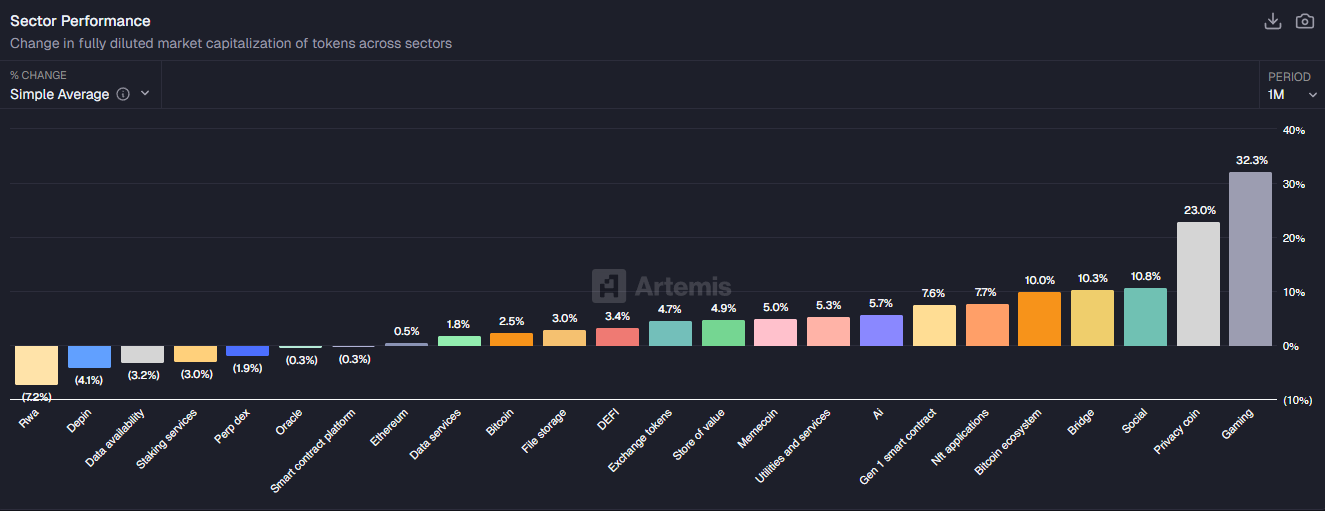
With continued capital inflows into the sector and similar dynamics to AXS, SAND could extend its rally further. Compared to AXS’s over 200% rise, SAND’s performance still looks relatively modest.
Analysts expect SAND to break through the $0.20 resistance zone. Some predictions suggest that if interest in GameFi continues to grow, it could approach $1.
sponsored
What risks should traders be aware of?
Although the price trend shows no obvious signs of depletion yet, some worrying signals are emerging.
CryptoQuant data shows that SAND reserves on spot centralized exchanges have reached their highest level in over a year. Approximately 1 billion SAND is currently held on exchanges, representing over 33% of the total supply.
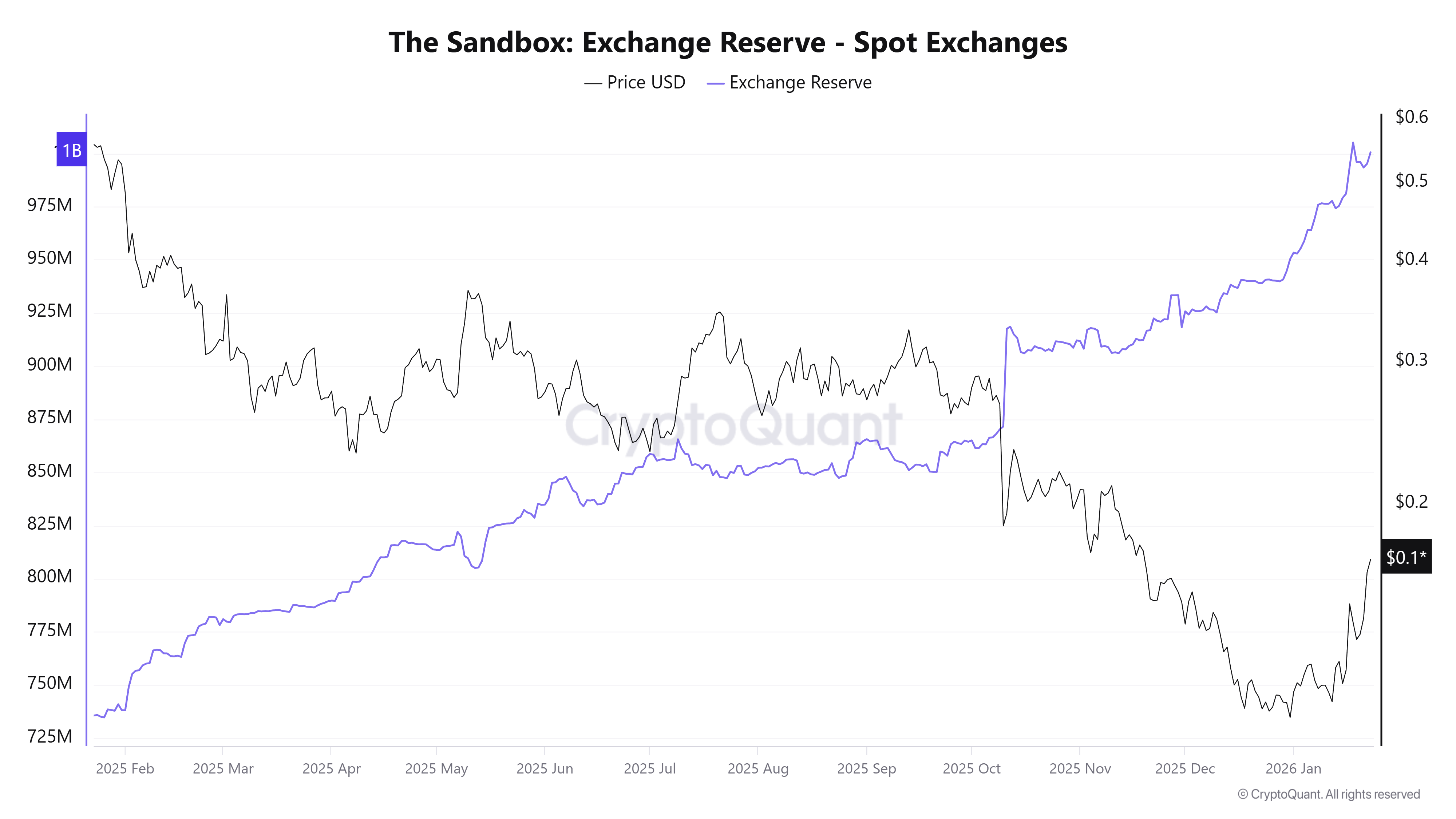
Rising foreign exchange reserves often mean that tokens are more likely to be sold on the open market, increasing the risk of price appreciation. This dynamic threatens the current upward trend. This suggests that the SAND breakout could become a trap if new capital inflows are insufficient to absorb selling pressure.
sponsored
Additionally, Swissblock’s institutional altcoin report, Altcoin Vector, points out that metaverse and gaming narratives, once considered dead, are making a comeback. But the recovery appears to rely more on speculation than sustainable growth.
Altcoin Vector’s Altcoin Quadrant shows that most altcoins are in the “accumulation” phase. In contrast, metaverse assets such as AXS and SAND jumped directly into the “scalp” zone as rare exceptions.
“Ride the META story, but proceed with caution. For a sustained long-term rally, growth needs to come from infrastructure and adoption, not just the story. Without a solid foundation of core assets, this remains a speculative play,” Altcoin Vector concluded.
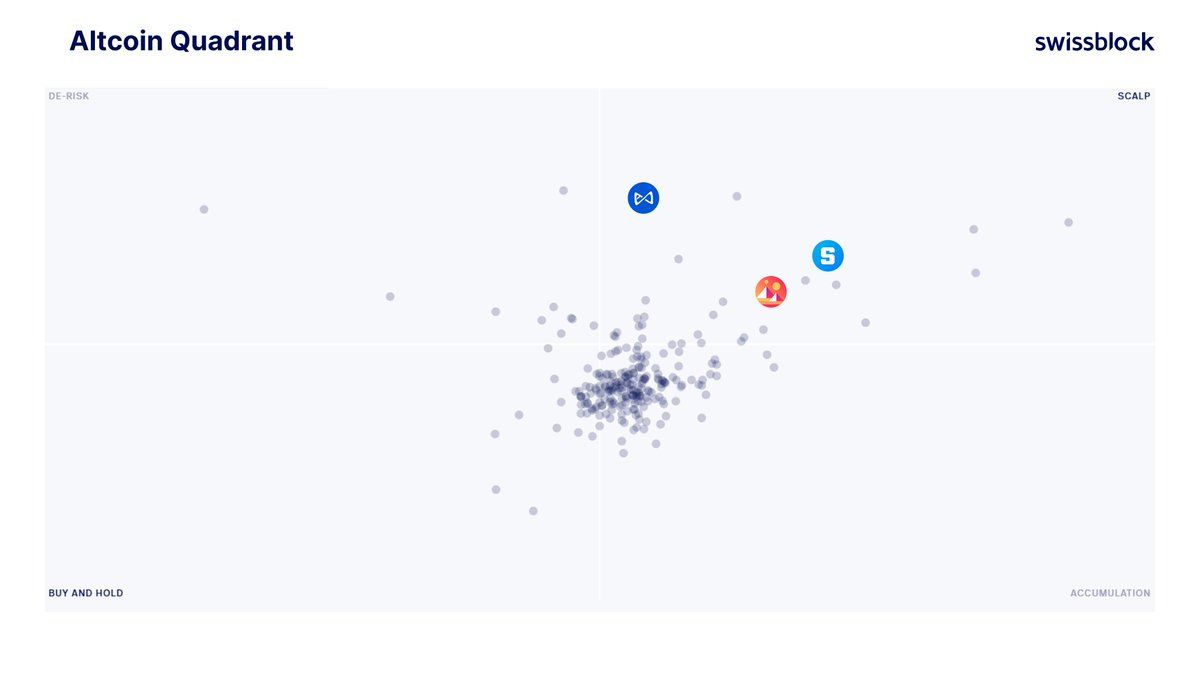
The report also explains that small-cap tokens often lead market performance when fast-moving capital seeks short-term gains. A sustained rally requires real infrastructure growth, true adoption, and a broader recovery led by Bitcoin and Ethereum.
