



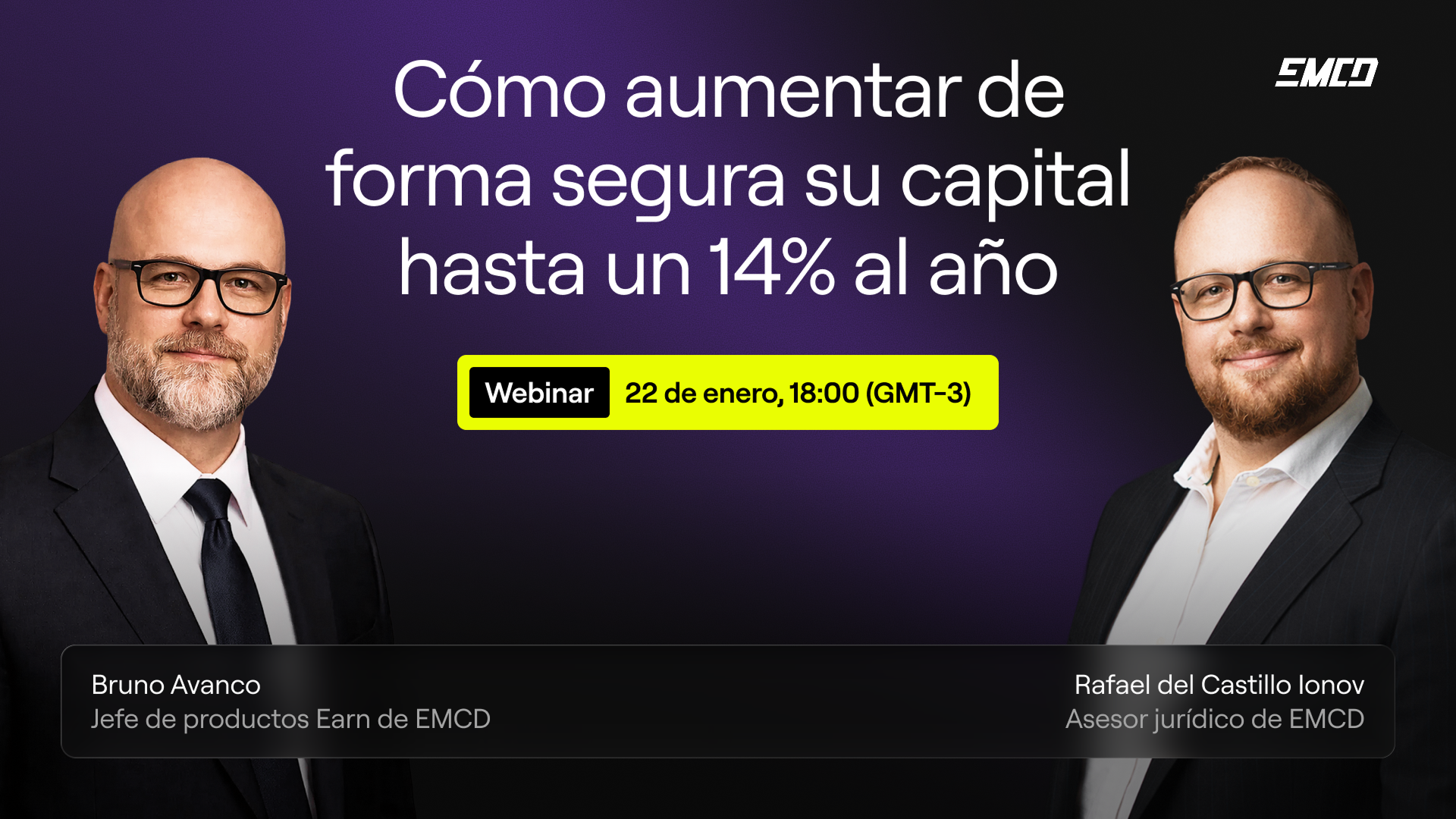
BeInCrypto and EMCD hosted a co-educational webinar and live Q&A focused on a core challenge across Latin America: how to protect purchasing power when traditional savings strategies are increasingly ineffective due to inflation and currency fluctuations.
The session titled “How to safely grow your capital by up to 14% per year” featured Bruno Avanco (EMCD), Rafael del Castillo (EMCD), and Bryan Maturana (BeInCrypto), who combined product and legal perspectives to discuss risk management, diversification, and how users can more objectively evaluate crypto platforms.
Inflation as a “silent tax” on savings
The webinar started with a macro-level framework. Inflation gradually erodes purchasing power, especially when capital is idle in local currency. Speakers emphasized that this dynamic is particularly evident in Latin America, where repeated price cuts have left many users looking for alternatives that offer better value retention over time.
The key point was simple. Doing nothing is also a decision, and one that is often costly in an inflationary environment.
Prioritize capital preservation and liquidity
Bruno highlighted two priorities that will shape the discussion.
Preserve capital rather than pursue aggressive returns Maintain liquidity, i.e. have access to funds when needed
He contrasted liquid products with illiquid options such as real estate, arguing that liquidity is important during times of uncertainty and rapid market change.
Due diligence over hype: How to evaluate a platform
A key segment focused on how users can reduce risk in a market where unverified or opaque projects are still common.
Mr. Rafael returned to practical validation signals.
A clear track record and operational history Transparency about the product and team Returns that look realistic rather than exaggerated Standard compliance measures presented as common practice across financial platforms (e.g. KYC/AML)
The broader message: Risk management starts before the investment, not after.
Coinhold Explained: Flexible vs. Fixed Approaches
In the second half, the discussion turned to EMCD’s Coinhold and how it positions itself for users looking for a more structured, low-maintenance approach.
Bruno outlined two formats.
Flexible plan: low rewards and can be withdrawn at any time Fixed plan: high rewards and funds are locked until the end of the selected period (examples discussed include periods ranging from approximately 1 month to up to 1 year)
Speakers also emphasized that returns are not guaranteed and explained that they are estimates, not certainties.
Stablecoins, key assets, and the role of diversification
When asked how to prevent losses in volatile markets, the answer was straightforward: “There is no way to eliminate market risk.”
Instead, speakers suggested managing exposure by:
Diversification between asset types Favor larger, more established crypto assets when taking volatility risks Stablecoins for users who prioritize low price volatility Users only allocate what they can emotionally and financially tolerate
Audience Q&A: Specific points
The live Q&A provided some specific clarifications.
Minimum starting amount: According to the webinar, Coinhold can start from $10. Upper limit: The speaker stated that there is no upper limit, but encouraged users to stay within their personally comfortable quotas. Taxes: EMCD does not provide individual tax advice. Users are responsible for declaring and paying taxes according to their place of residence.
Final point: education + small, consistent actions
The webinar concluded with the pragmatic note that in a high inflation environment there is an increasing need to think beyond traditional savings, but that participation in cryptocurrencies needs to be informed, evaluated and aware of the risks.
The speakers encouraged the audience to:
Understand where your revenue comes from and what risks exist Avoid emotional decisions Start small and build gradually Prioritize transparency and platform trust
The overall framework was consistent with the atmosphere of the session. Cryptocurrency can be part of a capital strategy, but only if users approach it with validation, diversification, and realistic expectations.
