




MicroStrategy stock is looking to stabilize after weeks of declines of more than 12%. Bitcoin’s recovery to near $79,000 at the time of writing has helped ease concerns surrounding the company’s average cost base that briefly dominated market sentiment in late January.
Investors have been concerned for some time that MSTR could face unrealized losses due to the sharp drop in Bitcoin prices. Now that near-term risks have faded, attention has shifted to whether a price recovery will surface. Correlation data, capital flows, and price structure suggest that the stock has entered a high-risk zone, and the next big move in BTC could determine its direction for weeks to come.
Sponsored Sponsored
Bitcoin correlation explains why MicroStrategy fell faster
Since early October, MicroStrategy is down about 62%, while Bitcoin is down about 38% over the same period. This gap highlights how MSTR behaves like a leveraged version of Bitcoin. MicroStrategy’s declines are usually steeper when Bitcoin declines, as investors also consider balance sheet exposure, debt, and sentiment risk.
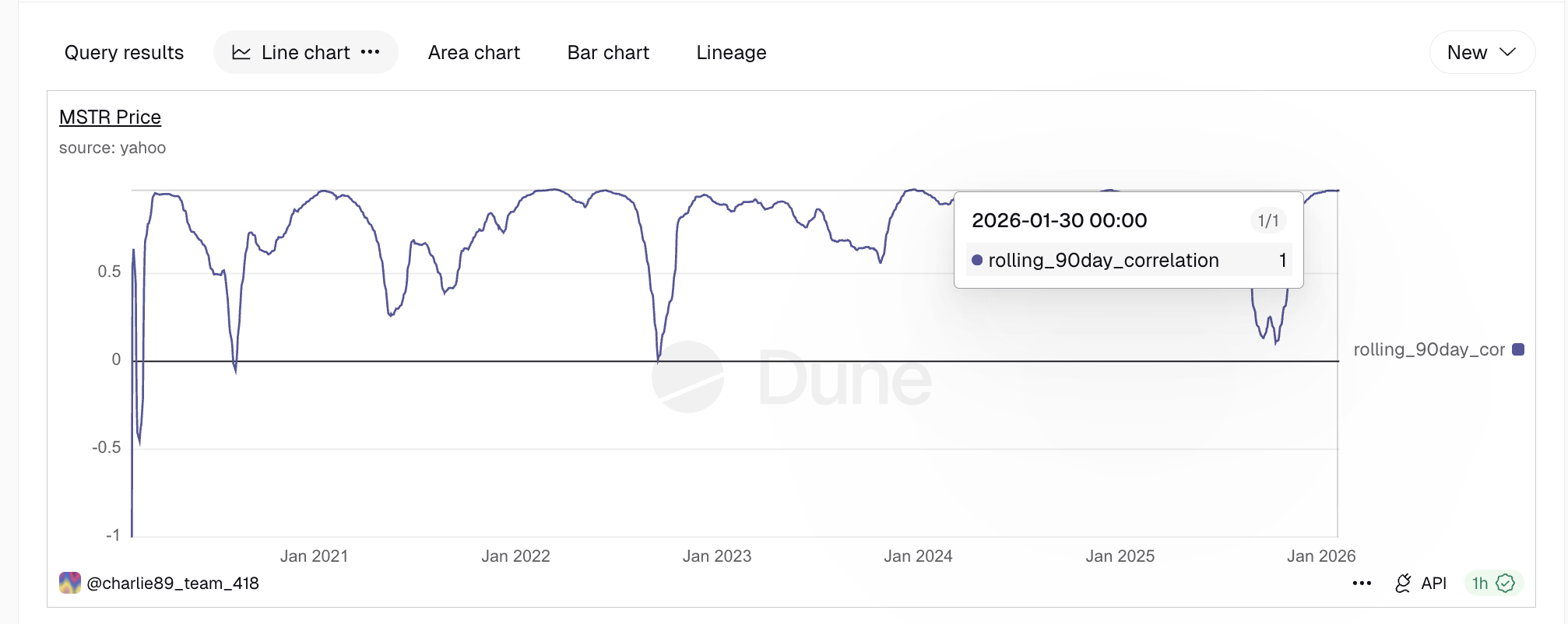
Dune data support this relationship. The 90-day rolling correlation between MSTR and Bitcoin is close to 0.97 (close to 1), which means the two assets are moving in the same direction almost every day.
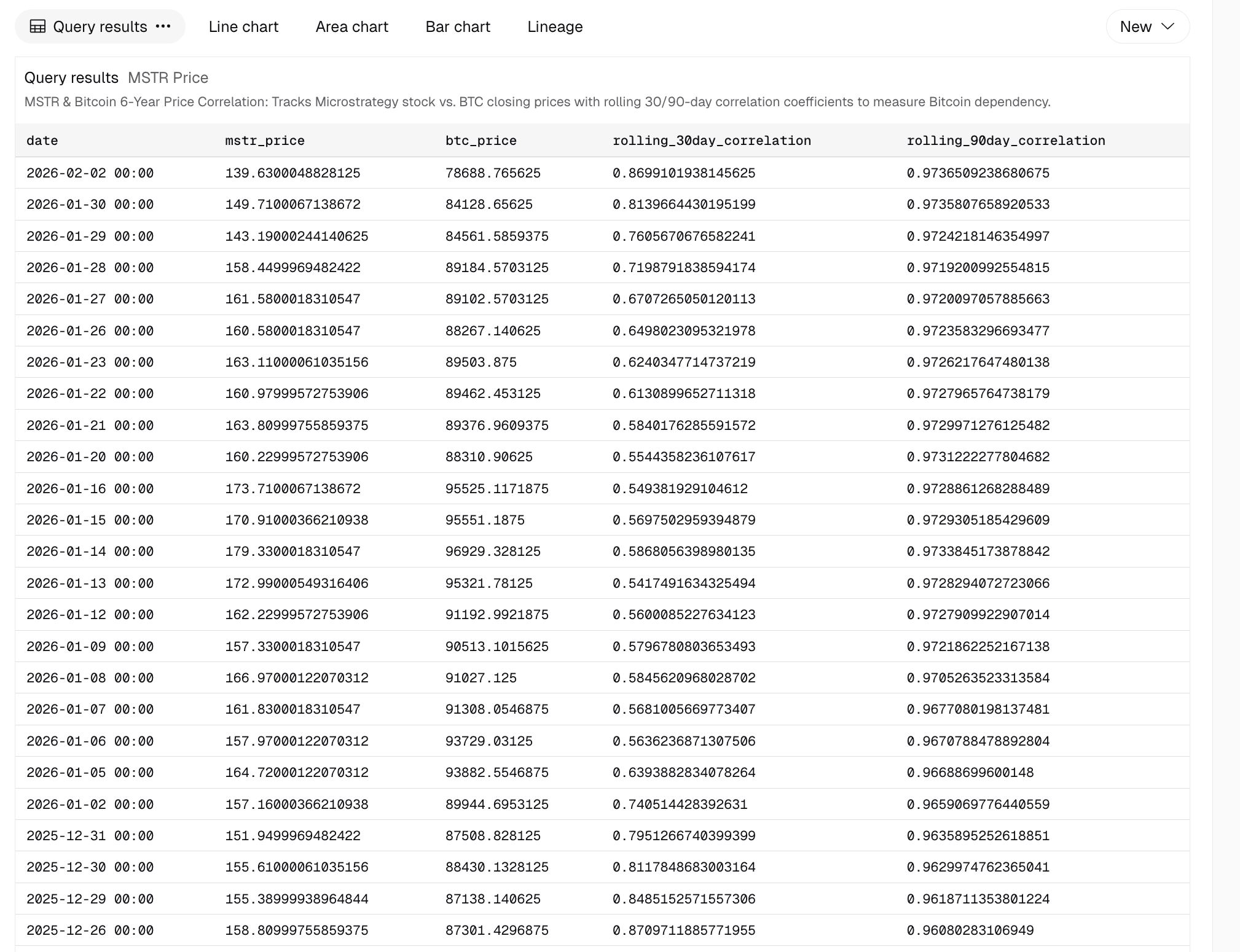
However, this is not inconsistent with a larger drawdown. Correlation measures direction, not magnitude. This shows that while MSTR is following Bitcoin’s trend, leverage and structural risk are amplifying its movements.
The move became apparent in late January, when Bitcoin briefly fell below MicroStrategy’s average purchase price of around $76,000. That moment sparked fears of unrealized losses and increased pressure on stock prices. Bitcoin’s rebound above $78,000 lessened that threat and helped calm sentiment.

Sponsored Sponsored
Still, the correlation remains very high. If Bitcoin falls again, MSTR stock price is likely to follow suit, and downside risk remains elevated.
Money flows and volumes send mixed signals
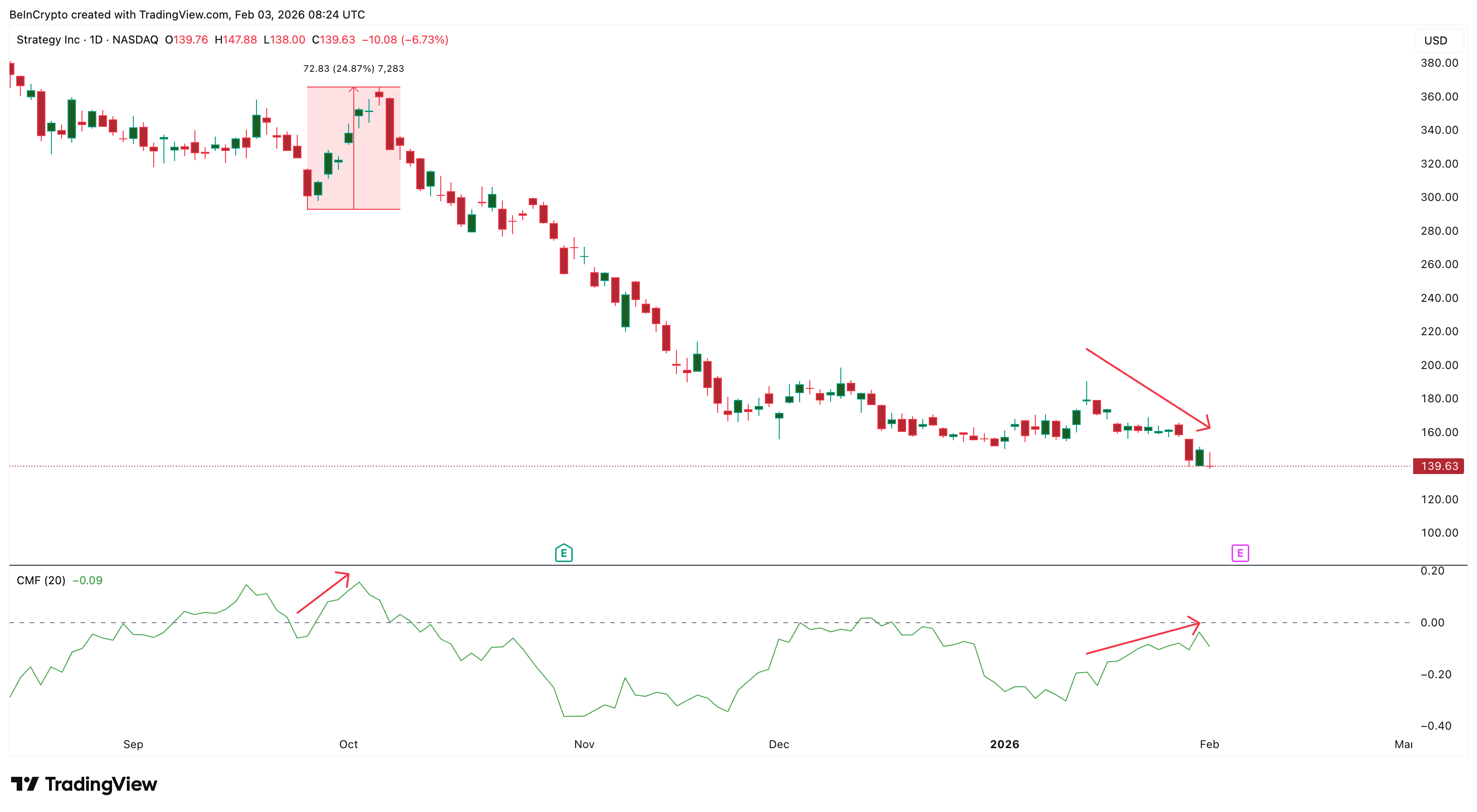
Capital flow data shows a more complex picture. Chaikin Money Flow (CMF), which uses price and volume to measure whether money is flowing in and out of an asset, has been trending upward since mid-January. From January 14th to February 2nd, MSTR stock price fell, but CMF continued to rise. This bullish divergence suggests that large investors were quietly accumulating money during the downturn.
Want more token insights like this? Sign up for Editor Harsh Notariya’s Daily Crypto Newsletter here.
Sponsored Sponsored
The CMF is currently approaching the zero line that separates net inflows from net outflows. A sustained move above zero will confirm that buying pressure exceeds selling pressure. The last time it significantly broke above this level was in early September, when the stock has risen nearly 25%. This makes CMF an important trigger for any recovery attempt.
However, MicroStrategy’s stock price tells a different story. On-balance volume (OBV), which tracks whether trading volume supports the price trend, is trending lower. In the recent selloff, OBV fell along with the price and broke below the uptrend line. This indicates weakening of participants and waning interest in retail.
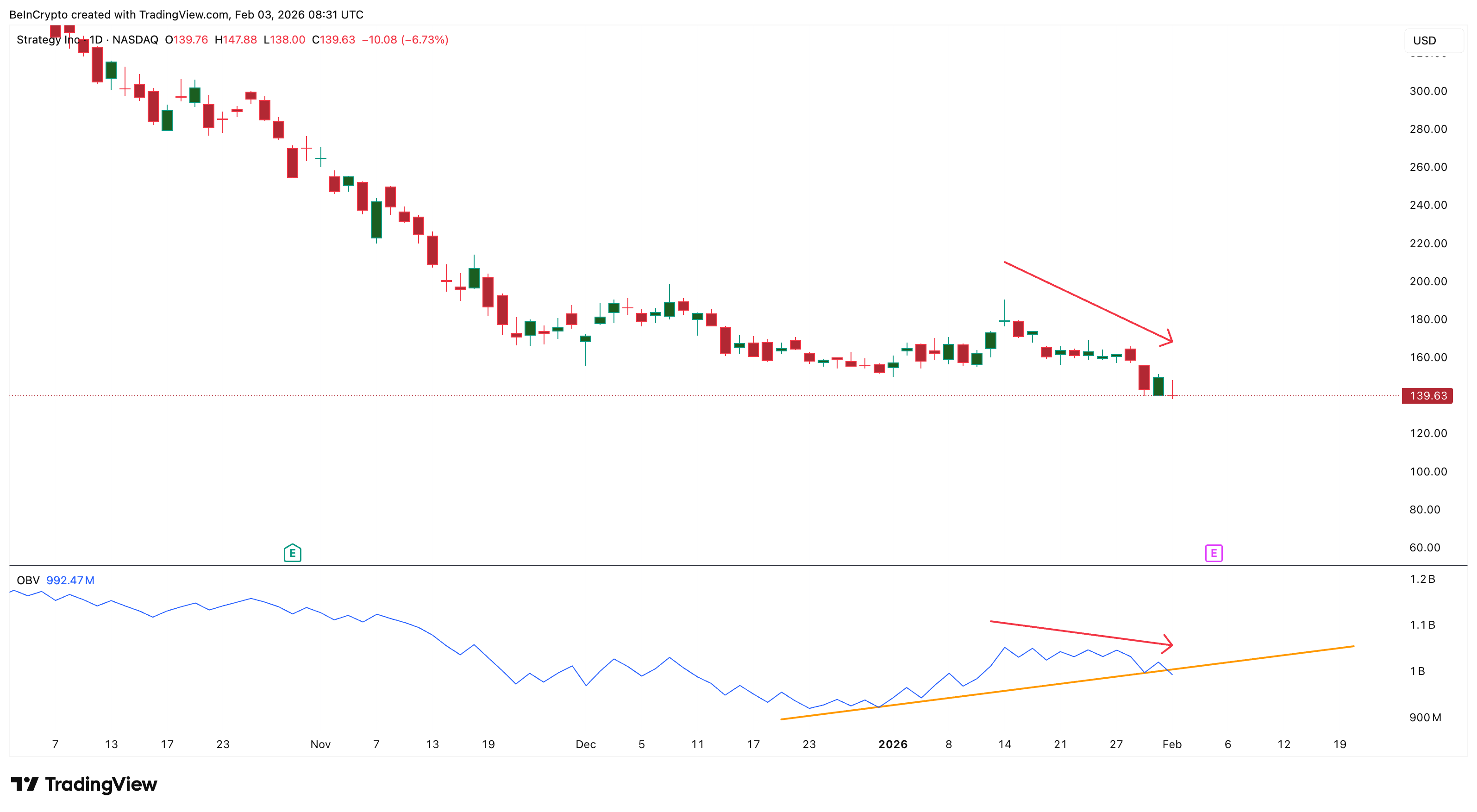
Together, these indicators send mixed signals. While the CMF points to selective accumulation by large players, the OBV indicates that broader market engagement remains weak, perhaps due to recent cost base hits.
When these indicators diverge, rallies often struggle to gain momentum. Without strong participation, upward movements tend to disappear quickly. As a result, even with early positioning, financial institutions will likely need to improve Bitcoin’s performance to achieve sustainable gains.
Sponsored Sponsored
MicroStrategy Key Stock Price Levels Indicate a 20% Decision Zone
The MSTR price level is more important than ever as indicators are sending conflicting messages. The most important support is near $139. This level has been tested multiple times and coincides with Fibonacci support from the October drop, making it a key decision point for the market.
If the price closes below $139 for the day, downside risk will increase sharply. In this scenario, the price could fall towards $107, which could lead to a further decline of around 20%. Such a move is likely to coincide with a new decline in Bitcoin. A deeper collapse will likely coincide with renewed weakness in Bitcoin.
On the upside, the first major resistance is near $170, which is also about 20% from current levels. This level has limited rebound attempts several times and remains a significant barrier. A sustained break above $170 would improve the technical structure and signal a return of confidence. Beyond that, the next hurdle is around $190.
If this zone can be cleared, the trend will definitively turn bullish, confirming that capital inflows are leading to price strength.
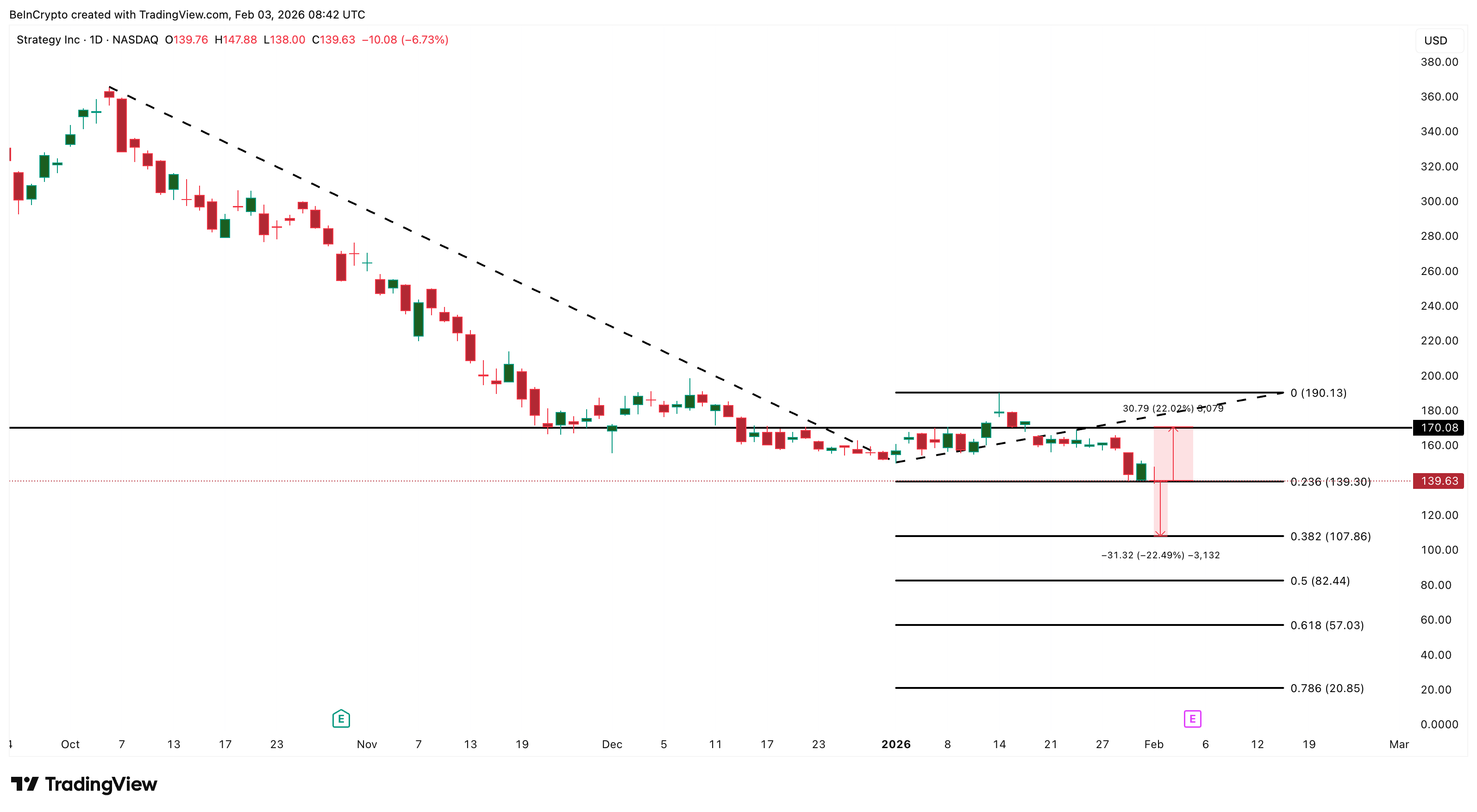
MicroStrategy is currently concentrated around $139, with risk at $107 and resistance near $170. This wide area corresponds to nearly 20% in either direction, forming a two-sided decision zone. Bitcoin trends will likely determine which one breaks out first. A price move above $80,000 could help MSTR challenge $170, but continued volatility could prolong the consolidation. If Bitcoin falls, the support around $139 becomes vulnerable.
Until a clear breakout occurs, volatility is likely to remain high and any rally carries the risk of a reversal.
