




Bitcoin soared this week, briefly approaching $70,000, but has since fallen back. The move sparked debate across the market. Has Bitcoin finally bottomed out, or is this just a rescue rally amid a broader bearish phase?
Multiple on-chain, derivative and institutional indicators are showing early signs of stabilization. However, the key signals still point to a fragile recovery rather than a confirmed bullish reversal.
Options market shows fragile situation, no strong support
According to Glassnode’s GEX heatmap, Bitcoin options positioning has recently shifted into what traders call a negative gamma regime.
Simply put, gamma measures how options market makers hedge their risks. When Bitcoin is in the negative gamma zone, dealer hedging tends to amplify price movements.
That is, while the rise can accelerate rapidly, the fall can accelerate as well.
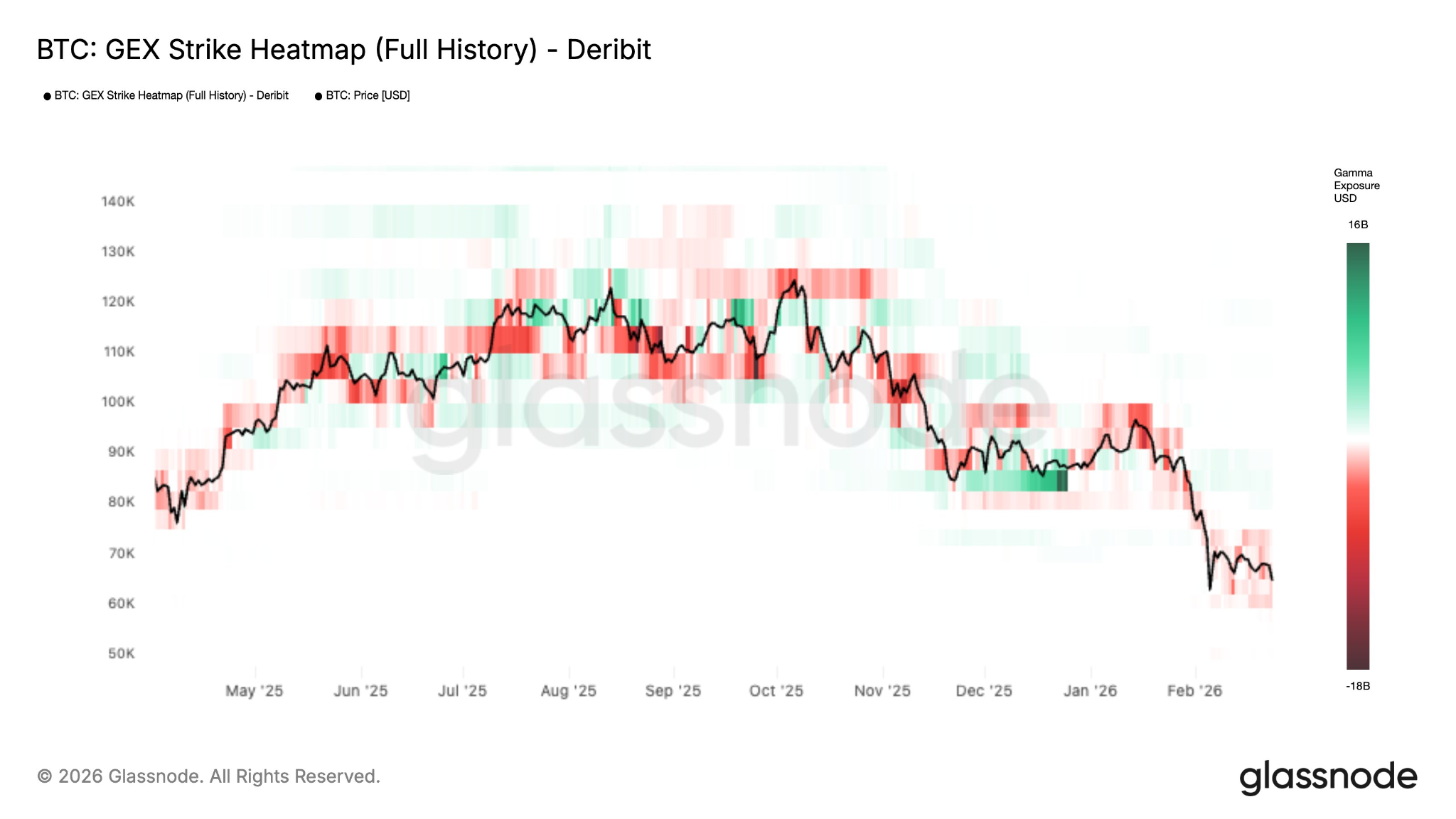
The heatmap also shows that there is less strong resistance “gamma wall” above the current price. This makes the rally less frictional and helps explain Bitcoin’s sudden surge in value.
However, it also means that the market is not structurally stable.
Without strong hedging support, price movements remain fragile and prone to reversal.
Bitcoin spot demand improves for the first time in months
CryptoQuant data shows Bitcoin’s apparent demand, which measures net accumulation relative to new supply, has turned positive for the first time since November.
This is an important early signal. If demand exceeds supply, it suggests that buyers are stepping in and absorbing coins from sellers.
However, a single positive change does not ensure a complete reversal. In past bear markets, temporary increases in demand were often preceded by subsequent strengthening of demand.
If the trend of increasing demand persists over several weeks, it would provide stronger support.
Short-term holders are still selling at a loss
Another important indicator comes from CryptoQuant’s short-term holder P&L data, which tracks whether new investors are selling at a profit or at a loss.
Data shows that short-term holders have been selling at consistent losses since late January. Some big loss spikes occurred in early February and again recently.
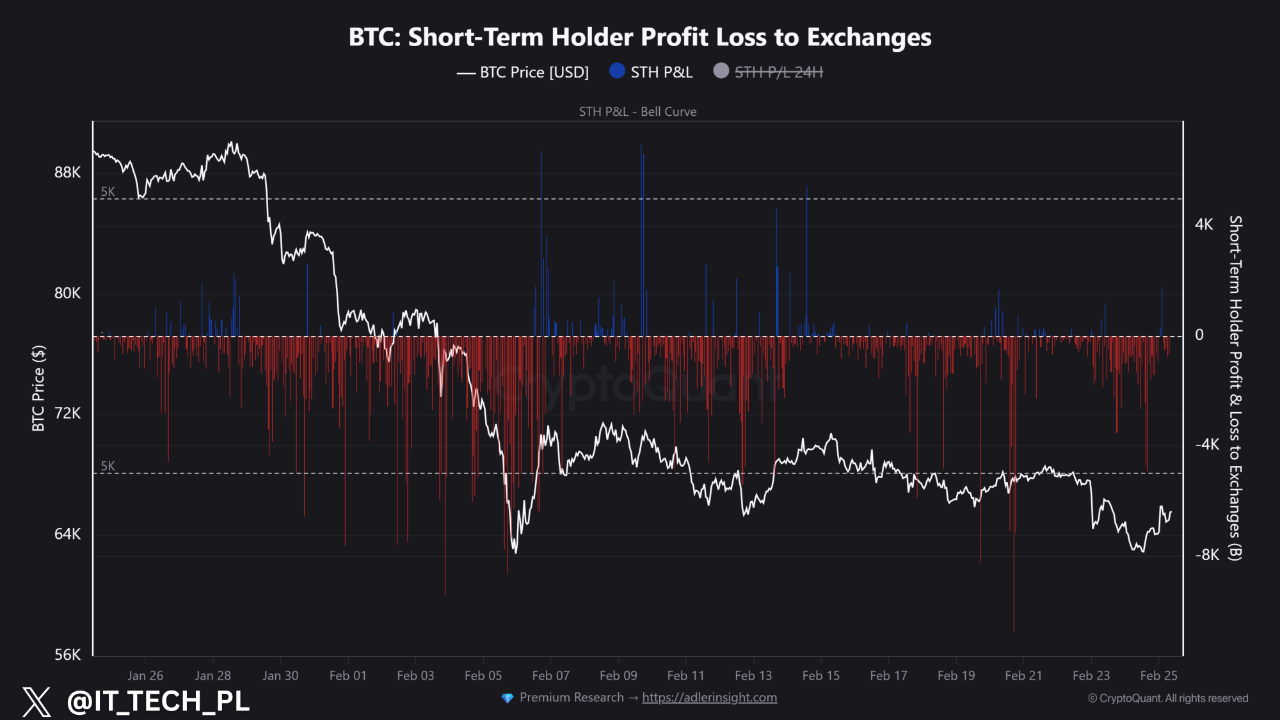
This pattern is known as capitulation, where weak investors exit the market. It is common to capitulate near the bottom of the market as strong buyers absorb those losses.
However, the signal is not completely inverted.
Analysts warn that until short-term holders start selling for profits again, the rally could lead to “exit liquidity” that could encourage trapped investors to sell rather than hold and become bullish.
Technical and historical data suggest selling pressure is easing
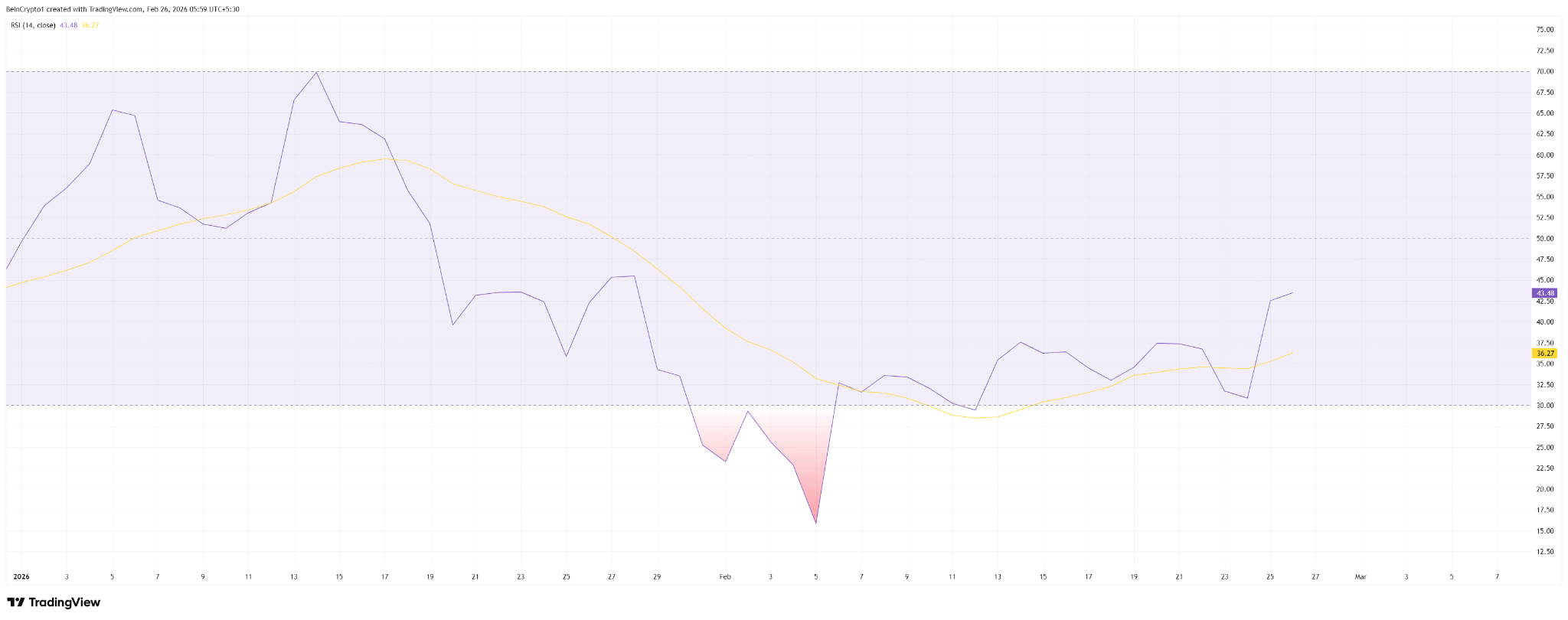
The Relative Strength Index (RSI), which measures Bitcoin’s momentum, has recently recovered after reaching extremely oversold levels in early February. This suggests that selling pressure is easing.
Historically, such RSI recoveries often lead to short-term rebounds.
Quarterly performance data also shows that Bitcoin rarely suffers large losses over multiple quarters in a row.
While this pattern does not guarantee a bottom, it supports the view that the market may be entering a stabilization phase.
Institutional flows continue to show weakness
Institutional positioning remains an important issue of concern. Previous data has shown that Bitcoin ETFs have experienced sustained outflows, and SEC filings revealed that large investment advisors and hedge funds have significantly reduced their exposure in the second half of 2025.
This suggests that institutional investor demand has not fully returned. A strong bull market typically requires continued capital inflows from large investors.
There are signs of an early bottom, but a bull market is not confirmed.
Bitcoin is showing some early bottoming signals. Spot demand is improving, capitulation appears to be being absorbed, and technical indicators suggest selling pressure is easing.
However, there are still no important confirmation signals.
Short-term holders are still in loss territory, institutional investor capital flows remain weak, and the option market structure shows a fragile situation.
For now, Bitcoin’s rally appears to be more consistent with a bailout rebound than confirmation of a bullish reversal.
A sustained recovery is likely to require stronger demand, new capital inflows from institutional investors, and stabilization of prices above key resistance levels.
