




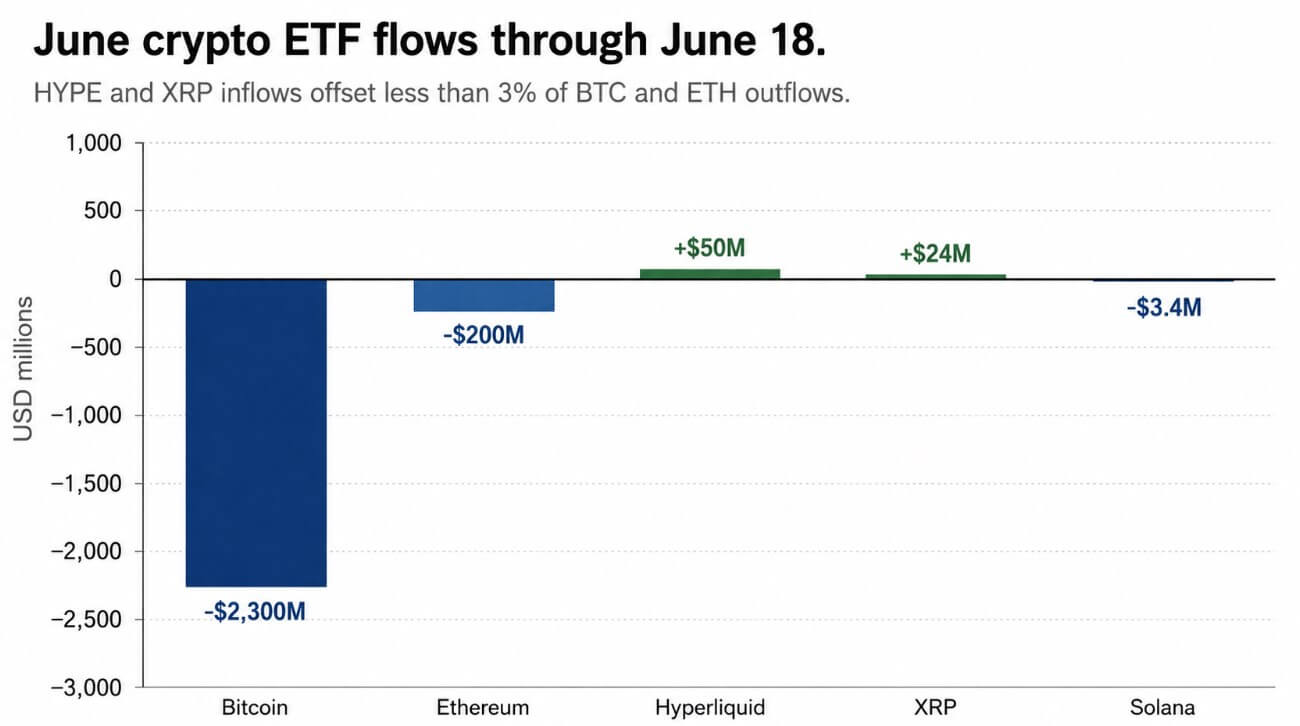
Through June 18, the U.S.-traded Spot Bitcoin ETF had lost about $2.3 billion, and the Ethereum ETF had lost about $200 million. Hyperliquid products attracted net inflows of approximately $50 million, the XRP ETF added approximately $24 million, and Solana ended with outflows of $3.4 million.
Inflows into altcoins totaled about $74 million, less than 3% of the $2.5 billion outflows from Bitcoin and Ethereum ETFs over the same period.
Bitcoin ETF roughly outperformed HYPE inflows 46:1, XRP inflows are approximately 96:1, rotation.
Hyperliquid’s HYPE Persistent Bidding
Bitwise launched the Spot HyperLiquid ETF (BHYP) on May 14, describing it as one of the first Spot HyperLiquid products in the U.S. and the first to incorporate in-house staking.
21Shares’ THYP and Grayscale’s HYPG are also included in Farside Investors’ flow chart, which shows cumulative HYPE ETF inflows of approximately $189 million through June 18, despite outflows of Bitcoin and Ethereum products.
June’s $50 million inflows came from a category that started in mid-May and recorded fewer than 25 trading sessions, making consistency a more meaningful signal.
While this demand pattern can be read as institutional investors concentrated in on-chain derivatives exchanges, the theory is specific enough to hold up even as demand for broader crypto ETFs shrinks.
In the bullish case, we believe that persistence through a broadly negative ETF environment indicates that HyperLiquid has a clear buyer base, including allocators who have expressed their thesis on on-chain perpetual infrastructure and maintain their position as BTC and ETH products release assets.
The bearish case is that the category is six weeks old, assets under management are scarce, and one week of institutional redemptions could reverse the cumulative inflows that have built up over the product’s trading history.
Regular demand for XRP
According to data compiled by SoSoValue, the XRP Spot ETF increased by $10.6 million during the business week of June 14-18, with cumulative inflows reaching approximately $1.5 billion and total net assets across the category at approximately $995 million.
The XRP ETF’s negative streak spanned only two weeks since mid-March, including several sessions that saw outflows of Bitcoin and Ethereum products, indicating repeated demand by the retail and institutional base for regulated access to assets that predate the ETF wrapper, and existing holders seeking a format that conforms to the exposure they already have.
A bullish signal is two negative weeks out of three or more months. Demonstrates a durable buyer base with sustained appetite throughout the macro period amid a broader challenging environment. And weaknesses specific to cryptocurrencies.
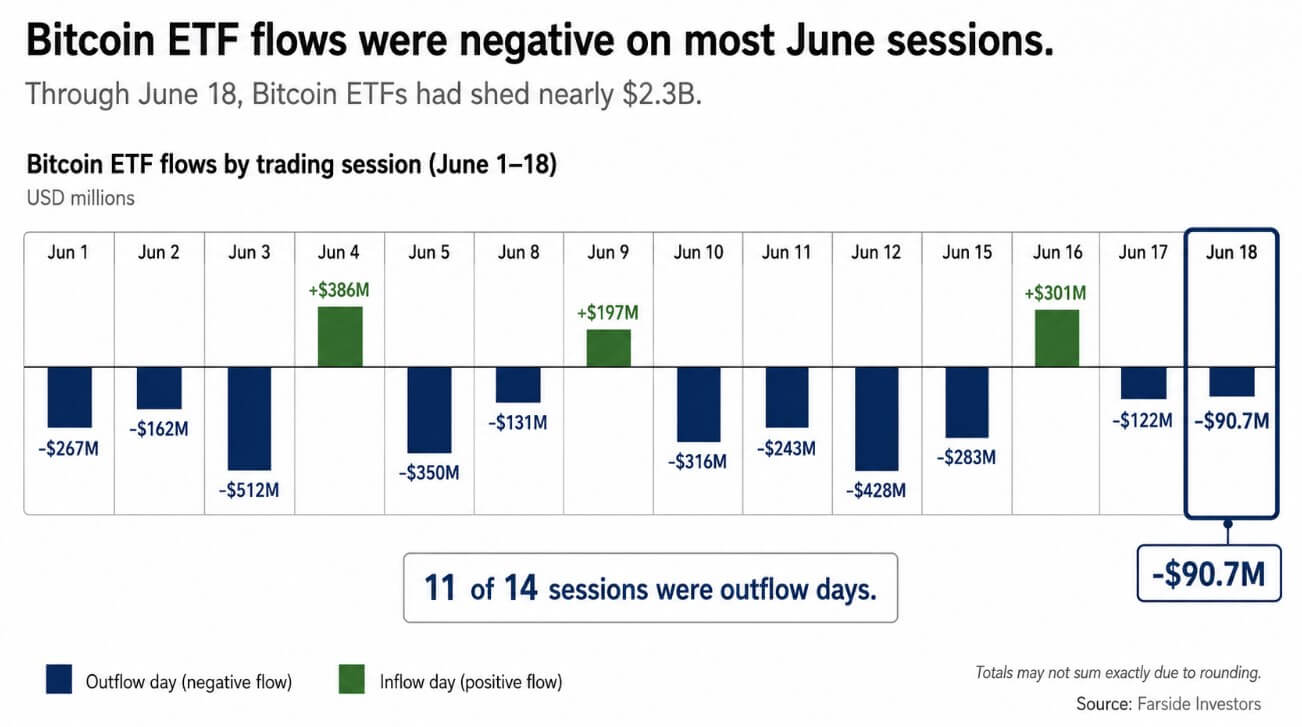
The bearish case is that the cumulative inflows of $1.5 billion over several months, distributed across the sub-$1 billion net worth category, represent measured demand of $10 million to $25 million more each week, far short of the amounts recorded in BTC ETF sessions such as the $90 million outflow on June 18th.
Categories June to June 18 Flow Key Signals Bullish Case Bearish Case Hype ETF + $50M Continued inflows despite widespread ETF weakness On-chain derivatives infrastructure outstanding buyer demographic The category is very young and thin. Weekly redemptions could reverse signal Recurring regulated product demand for XRP ETF+$24 million Existing holder base could support steady ETF inflows Weekly additions remain too small to offset BTC/ETH redemptions BTC + ETH ETF-$2.5 billion Core crypto ETF demand still contracting Outflows could reverse as macro risk appetite improves Continued redemptions remain key market signal
What Bitcoin Leaked Data Shows
Bitcoin ETFs recorded negative flows in 11 out of 14 trading sessions in June. The $90.7 million outflow on June 18th occurred on the same day, and $12.8 million was also outflowed from the Ethereum ETF.
ETF flows have macro significance because they represent demand for brokerage accounts, dollars moving through a regulated wrapper with clearing and custody infrastructure, a type of institutional flow that causes prices to fluctuate on a weekly time frame.
Citi estimates that Bitcoin ETF spot flows account for approximately 45% of the weekly BTC price movement, a figure from a bank research note that could not be independently verified in Citi’s primary documentation, but claims in that direction track June trading and the continued negativity in BTC’s price performance.
On June 17, the Fed maintained its target range at 3.50% to 3.75%, explaining that as inflation remains elevated relative to its 2% target, short-term dollar yields will remain at meaningful levels, and the opportunity cost of volatile crypto exposure will penalize allocators who may add to ETF positions.
The two altcoin categories with net inflows had particular stories to tell. Hyperliquid as an on-chain derivatives exchange, and XRP as a regulated access product with an existing holder base.
Whether HYPE and XRP inflows continue in July will depend on whether Bitcoin and Ethereum ETFs return to positive weekly inflows.
If so, the altcoin bid looks like early positioning. If BTC and ETH continue to shed assets, the remaining inflows into smaller products will represent a floor for crypto ETF demand, and the last positions held by allocators will be in HYPE and XRP.
