




Solana’s latest foray into hardware-driven cryptography took an unexpected turn this week after the $SKR token associated with the company’s new Seeker smartphone soared more than 200% within days of its launch, according to CoinGecko data.
The rally followed the highly anticipated Token Generation Event (TGE) and airdrop associated with Solana Mobile’s second-generation device, a $500 Android phone designed for on-chain use. Although the initial volatility was expected, the scale and speed of the move caught the attention of the entire crypto market.
A mobile phone made for cryptocurrency users?
Solana Seeker is positioned as a Web3-native smartphone rather than a traditional flagship device. Integrate your wallet’s security, identity, and staking features directly into your operating system.
The phone includes a Seed Vault for private key storage, biometric transaction signing, and access to Solana’s dApp Store.
Users can interact with dApps, stake tokens, and track rewards without relying on third-party wallets.
According to Solana Mobile, more than 150,000 units were pre-ordered in the first wave of sales. Additional devices are being shipped as the ecosystem enters its second reward season.
sponsored
Launch of SKR token
The Seeker ecosystem is powered by SKR, a Solana-based token with a fixed supply of 10 billion. Approximately 30% of the supply was allocated to users and developers through airdrops tied to device ownership and on-chain activity.
Claims are processed directly through your Seeker wallet and instant staking is enabled. Developers received a portion of the largest allocation, and heavy users earned six digits of tokens.
Unlike many recent launches, $SKR debuted at a relatively low fully diluted valuation, limiting early selling pressure.
sponsored
Why has SKR skyrocketed so much?
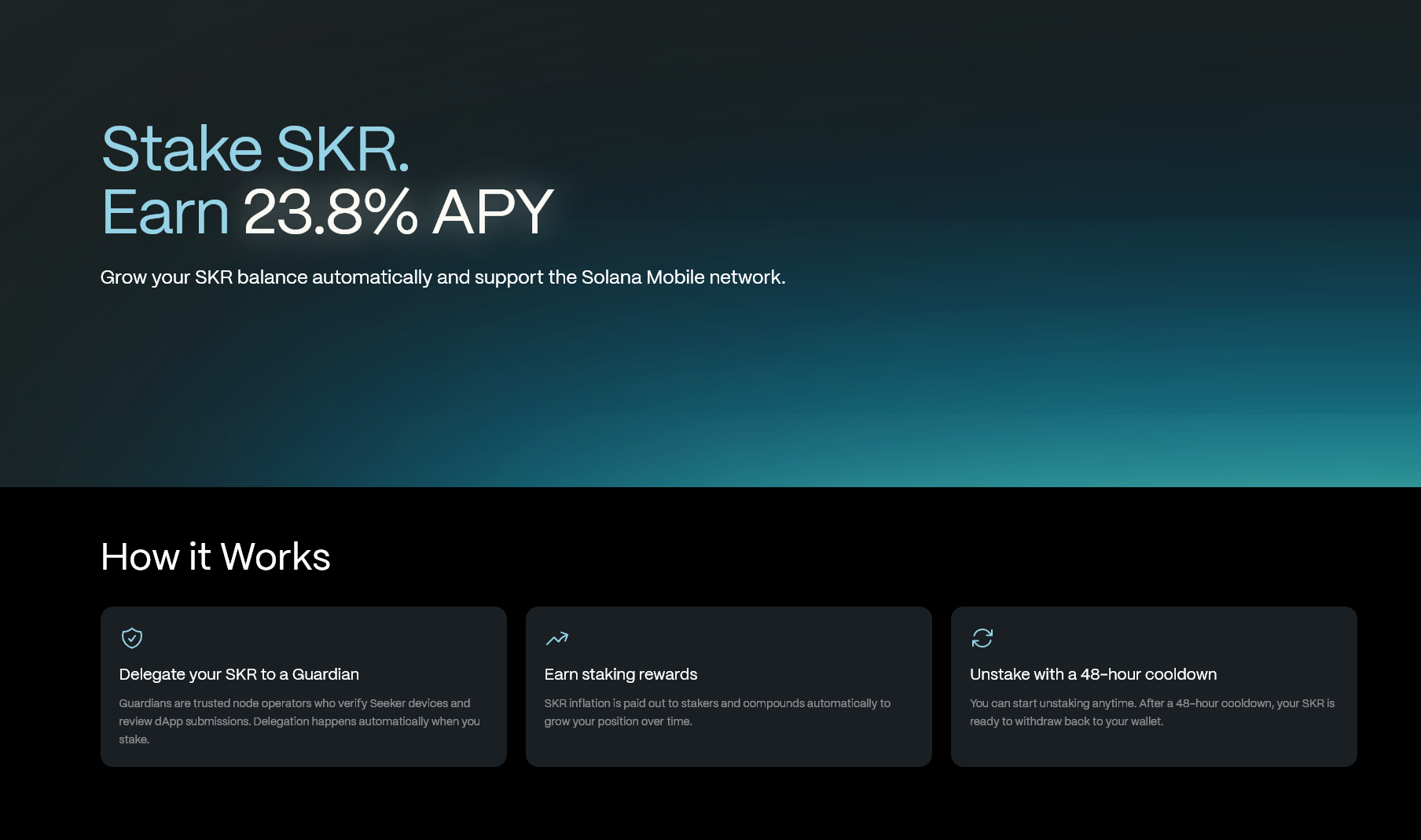
A combination of factors caused the SKR dollar to rise in the first two trading days. Initial staking removed the majority of tokens from circulation. Solana Mobile’s staking design encourages holders to lock up their tokens immediately, tightening supply during price discovery.
Early staking yields of nearly 24% APY also encouraged participation. These rewards come from token inflation rather than revenue, favoring early adopters and discouraging quick sales.
Meanwhile, the exchange’s quick listing and high trading volume accelerated price discovery. According to the data, the daily trading volume was over $140 million at its peak, which is high compared to the token’s circulating market capitalization.
Major exchanges such as Coinbase and Kraken listed the token despite its small market cap of nearly $200 million.
sponsored
These dynamics created short-term supply constraints during the launch period.
However, much of the initial demand was driven by airdrop dynamics, staking incentives, and low liquidity rather than sustained revenue or usage metrics.
Price pressures may re-emerge as unclaimed tokens enter circulation and inflation declines.
The launch of Seeker represents Solana’s most ambitious attempt to date to directly connect physical hardware to tokenized incentives.
Whether that model can scale beyond early adopters remains an open question.
