




President Donald Trump has nominated Kevin Warsh to be the next chairman of the US Federal Reserve, planning a leadership change at the world’s most powerful central bank in May 2026.
The nomination came at a precarious time. Inflation remains low, markets are volatile, and cryptocurrencies are already under pressure from macro uncertainties. The choice of Fed chair is more important now than at any time since the pandemic.
So who is Kevin Warsh, how is he different from Jerome Powell, and what does his appointment mean for interest rates and the crypto market in the second half of 2026?
Sponsored Sponsored
Who is Kevin Warsh?
Kevin Warsh is no outsider to the Federal Reserve System. His appointment requires Senate confirmation. But markets are already reacting to the policy signals behind this choice.
Warsh served as Fed president from 2006 to 2011, making him the youngest president in Fed history.
He worked closely with then-Chairman Ben Bernanke during the global financial crisis and served as the Fed’s representative at G20 meetings.
After leaving the Fed, Warsh moved into academia and policy. He is currently a senior fellow at Stanford University’s Hoover Institution and a frequent critic of modern central banks.
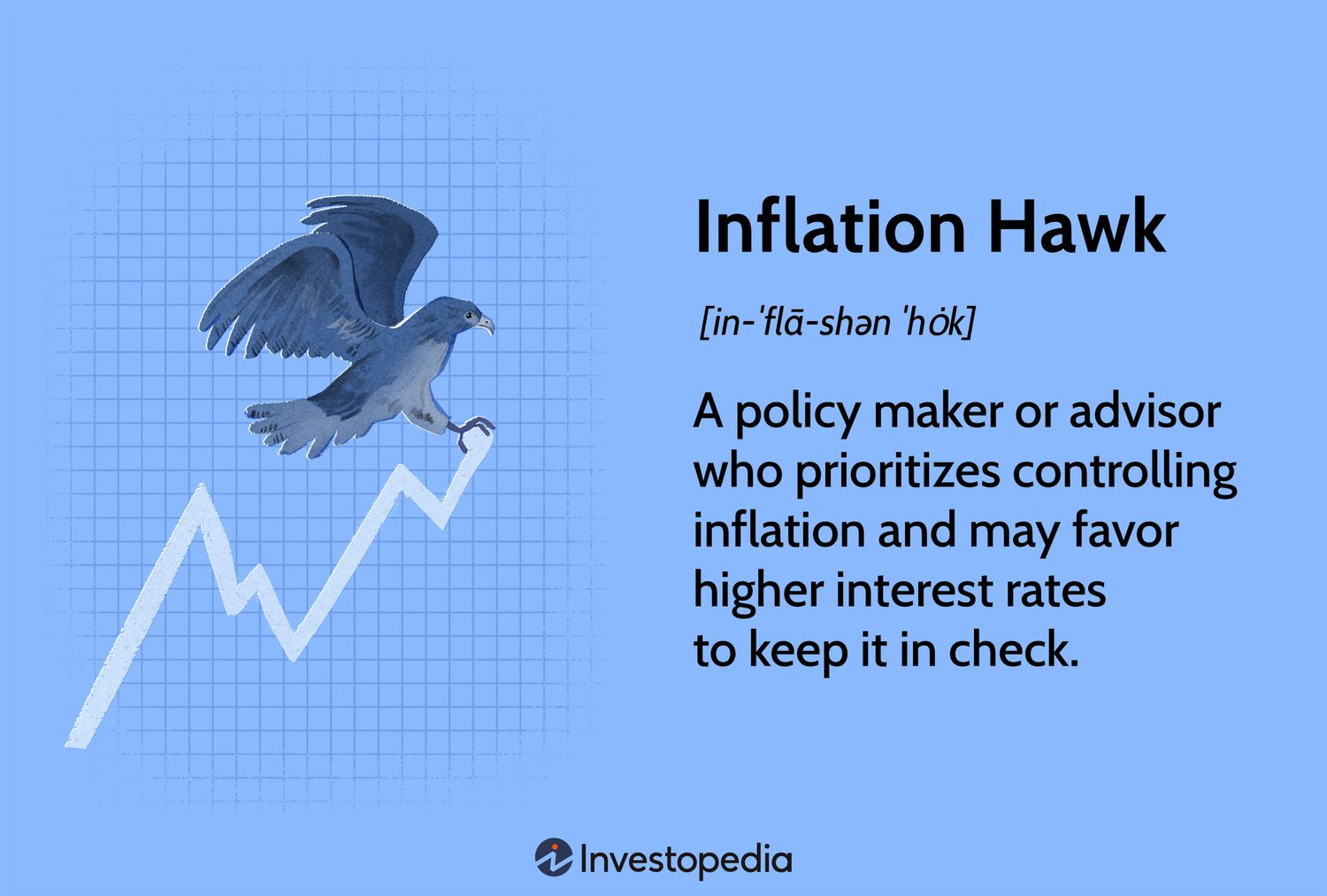
Mr. Warsh’s monetary policy record: Known as an inflation hawk.
Historically, Warsh is best described as an inflation hawk.
During the 2008-2009 crisis, he repeatedly warned that aggressive monetary easing could fuel future inflation. He opposed extending quantitative easing and pushed to shrink the Fed’s balance sheet even when inflation was under control.
This makes him incompatible with the Fed’s strategy beyond 2020.
But Warsh’s stance has evolved. He has argued in recent years that deregulation and fiscal restraint could allow inflation to fall naturally, allowing the Fed to lower interest rates without destabilizing prices.
This change is important in the current cycle.
Sponsored Sponsored
The difference between Mr. Warsh and Mr. Jerome Powell
The contrast with Jerome Powell is clear.
Powell embraced emergency stimulus during the coronavirus pandemic and initially downplayed the risk of inflation in 2021. That delay later led the Fed to enter its most aggressive tightening cycle in decades.
Mr. Warsh has openly called this period a policy failure, arguing that the Fed has lost credibility by reacting too slowly.
He has also criticized the Fed’s expanded responsibilities. Warsh opposes central bank involvement in climate policy, social issues and political signaling. Powell is more open to such efforts.
In other words, Mr. Warsh favors a narrower, more traditional Fed that focuses strictly on inflation, employment, and financial stability.
What this means for interest rates in 2026
The Fed’s latest decision this week left interest rates unchanged at 3.50% to 3.75%, signaling caution over multiple rate cuts in 2025.
The market currently expects the next rate cut not to occur until mid-2026.
Warsh’s appointment complicates that outlook.
Sponsored Sponsored
On the other hand, his reputation as an inflation hawk suggests discipline. Without clear evidence that inflation is under control, he is unlikely to rush into cuts.
Mr. Warsh, on the other hand, has publicly supported Mr. Trump’s view that excessive regulation and fiscal expansion lead to inflation. If those pressures ease, he may support a faster return to normalcy.
This creates a scenario in which interest rate cuts resume in the second half of 2026, but on a more stringent basis.
Warsh and Crypto: Not anti, but not evangelical
Mr. Warsh’s relationship with cryptocurrencies is delicate.
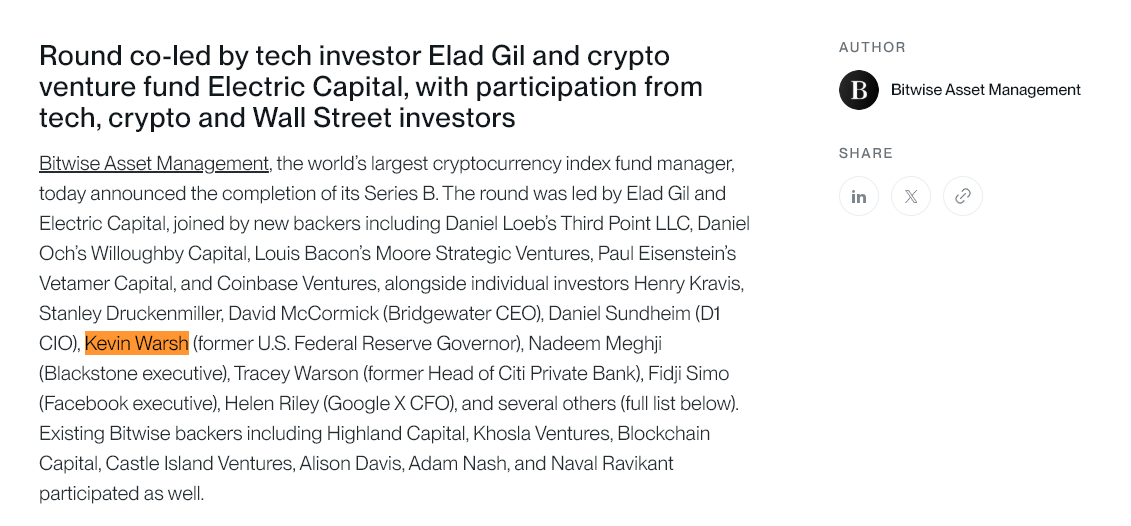
He has personally invested in crypto-related companies, including algorithmic stablecoin project Basis and crypto asset manager Bitwise. That alone separates him from many traditional policymakers.
At the same time, Warsh is highly skeptical that cryptocurrencies are money.
He has argued that Bitcoin’s volatility makes it unsuitable as a medium of exchange. However, he acknowledged that Bitcoin could function as a store of value similar to gold.
Sponsored Sponsored
His strongest stance is against unregulated private finance. Warsh has repeatedly called for clearer rules regarding stablecoins and supports a wholesale U.S. CBDC that would be limited to interbank use rather than retail consumers.
As such, he stands closer to regulatory clarity than outright hostility.
Is it possible that Mr. Warsh is bullish on cryptocurrencies?
In the short term, probably not.
Cryptocurrency markets are still driven by liquidity, interest rates, and macro risks. Warsh won’t take office until May, and interest rate policy will continue to depend on data.
However, the situation will change in the medium to long term.
Warsh’s emphasis on credibility, clarity of rules, and a restrained Fed could reduce the policy uncertainty that crypto markets have struggled with for years.
Risk assets will benefit if inflation continues to cool and Mr. Warsh backs a rate cut in late 2026. Cryptocurrencies remain highly sensitive to real yields and liquidity expectations, so they are likely to react positively.
Importantly, Warsh is not ideologically anti-cryptocurrency. He sees blockchain as a useful technology and prefers regulation over suppression.
That alone should improve sentiment.
Mr. Warsh is unlikely to cause stock prices to rise any time soon. But the second half of 2026 could be meaningfully more constructive if his term brings greater regulatory clarity, lower inflation, and a path to sustained rate cuts.
