




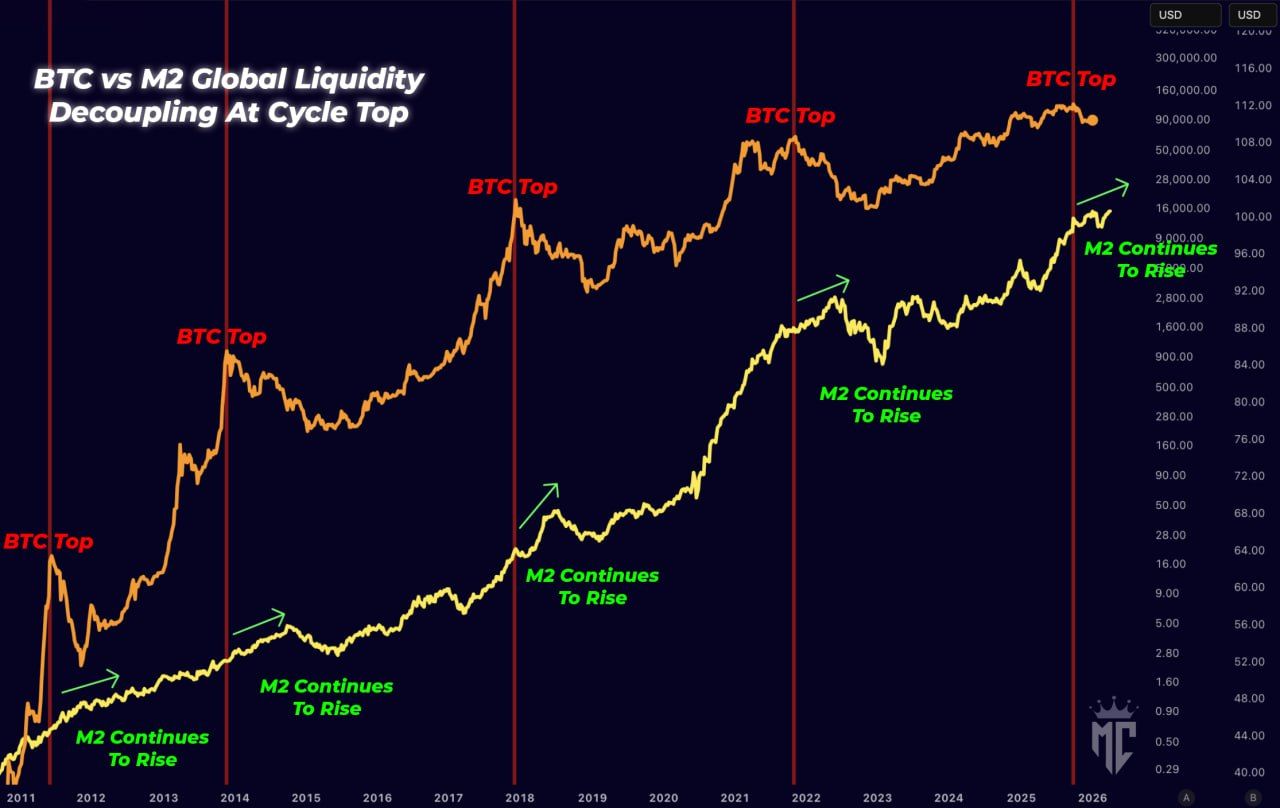
From mid-2025 onwards, Bitcoin shows signs of being decoupled from global M2 money supply growth. By 2026, this decoupling will become even more pronounced.
The historical correlation between these two factors once formed the basis of many bullish predictions. Analysts are currently deeply divided on what this phenomenon will mean in 2026.
sponsored
Analysts have mixed explanations regarding the relationship between Bitcoin and Global M2.
Fidelity Digital Assets’ January report continues to express confidence in the positive correlation between M2 money supply and Bitcoin price.
Fidelity highlights that Bitcoin bull cycles typically coincide with M2 accelerating. Due to its scarcity, Bitcoin absorbs excess capital much more strongly than other assets.
“With the start of a new global monetary easing cycle and the end of the Fed’s QT program, this growth rate is likely to continue on an upward trend through 2026, providing a positive catalyst for Bitcoin prices.” — Fidelity reported.
Analysts supporting this view argue that gold and silver have absorbed recent inflation-hedging demand. They also say that countries restarting money printing is a major driver for Bitcoin.
sponsored
Analyst Marty Party is even bolder. He uses a 50-day lag to compare the price of Bitcoin to the world’s M2 money supply. He predicts that this week could be the moment when Bitcoin prices recover to catch up with the increase in money supply.
“Bitcoin vs. Global Liquidity – 50 days late. M2 says rebound here – January 12th.” — MartyParty predicted.
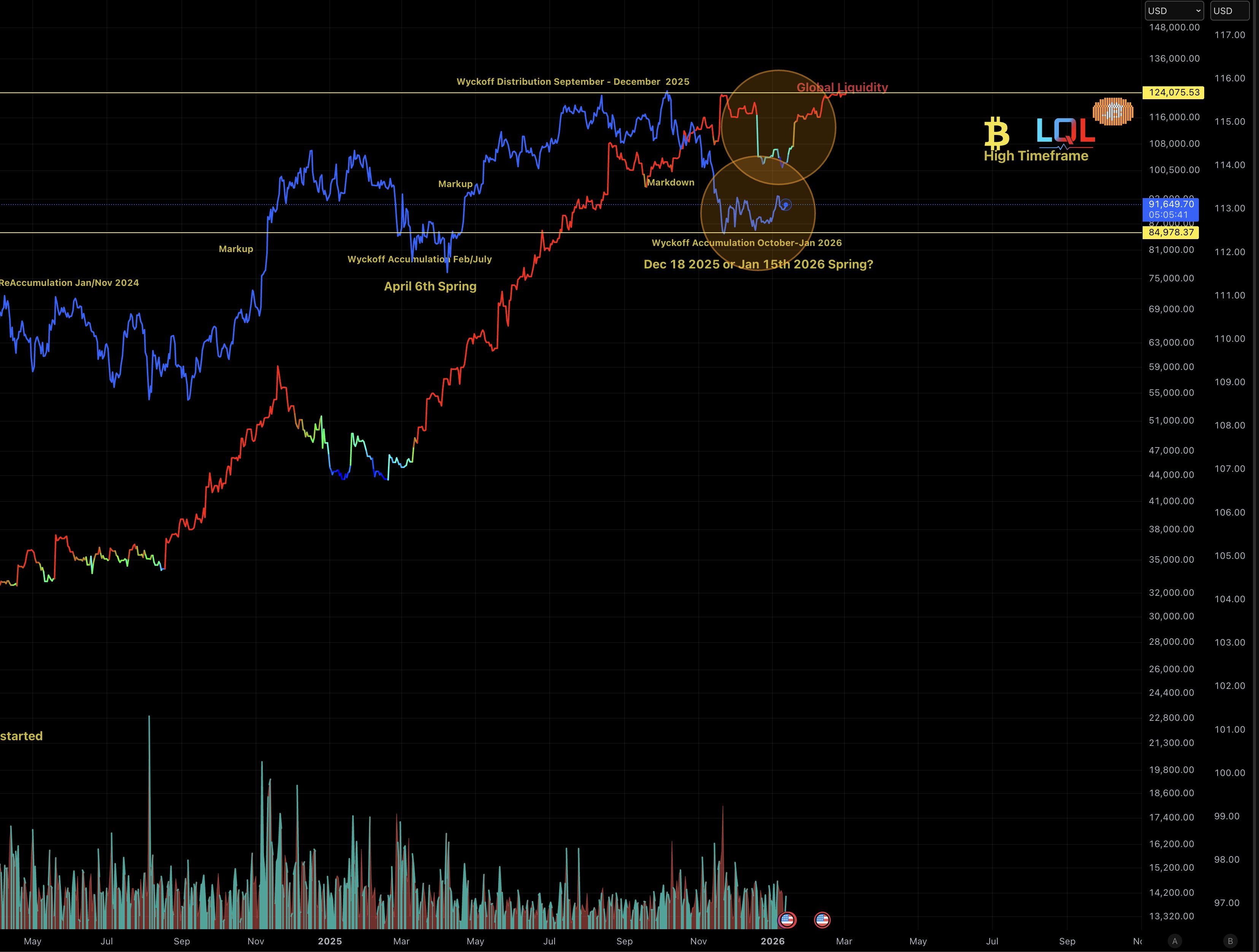
However, Fidelity’s chart shows that Bitcoin’s year-on-year growth rate and Global M2’s year-on-year growth have lost their correlation over the past year. By early 2026, the divergence had widened further. While Bitcoin is showing negative year-on-year growth, global M2 is growing by more than 10% year-on-year. The situation has sparked skepticism among other analysts.
sponsored
Mr. Crypto observes that periods when Bitcoin price decouples from M2 growth often mark major market highs. These stages are usually followed by bear markets that last between two and four years.
Analyst Charles Edwards, on the other hand, takes a completely different position in explaining this phenomenon.
He argues that 2025 was the time when the risk of quantum computers breaking Bitcoin’s encryption became real. Therefore, decoupling from M2 reflects this risk.
sponsored
“This is the first time that Bitcoin has been decoupled from the money supply and global liquidity flows. Why? 2025 was the first year that Bitcoin entered the quantum event horizon. The time frame until the probability of a quantum machine breaking Bitcoin’s encryption becomes non-zero is now shorter than the estimated time it would take to upgrade Bitcoin. The positioning of money is being repositioned accordingly to accommodate this risk.” — Charles Edwards.
In summary, the divergence of opinion among analysts reflects the growing complexity of the Bitcoin market. The bull camp is following a traditional historical model backed by Fed rate cuts and money printing. The bear camp is focused on unprecedented events related to technology risks.
Bitcoin also faces other risks as it enters 2026. These include risks from the yen carry trade and the possibility of World War III in an increasingly complex global economic and geopolitical situation.
These risks do not necessarily mean the end of Bitcoin. It could also create opportunities for many investors. These investors continue to believe that no matter how the world changes, Bitcoin will remain a long-term store of value, as it has proven throughout its more than 15-year history.
