




Binance will delist StaFi (FIS), REI Network (REI), and Voxies (VOXEL) from all spot trading pairs on December 17, 2025, 03:00 UTC due to low liquidity and low trading volumes.
This decision highlights the growing pressure on underperforming altcoins in a tough market. All three projects had a daily trading volume of less than $1 million prior to the announcement.
sponsored
Three altcoins go into free fall after Binance delisting announcement
The exchange announced the delisting on December 3, 2025, citing regular asset reviews. Binance creates the list by considering multiple factors, including:
Project team commitment, development activity, trading volume and liquidity, network stability, transparency, regulatory concerns, and community sentiment.
FIS and REI both recorded 24-hour trading volume of less than $1 million, indicating a weak market presence. After its initial promise, VOXEL steadily declined over six months and ultimately failed to meet Binance’s standards. Therefore, the exchange marked them for delisting.
“Binance will delist FIS, REI, and VOXEL on December 17, 2025,” reads an excerpt from the announcement.
Binance introduced new policies in 2025, including a “vote to delist” feature that solicits community input, and a “monitoring zone” for projects with limited updates and development activity. These measures are aimed at increasing transparency and protecting users.
sponsored
This removal affects several services other than spot trading, including trading bots, spot copy trading, simple earn, mining pools, loans, and margin trading.
Deposits will not be credited after December 18, 2025. Withdrawals are available until February 16, 2026. The announcement caused three altcoins to plummet amid expectations of reduced liquidity.
“VOXEL was a really good token, but its performance over the past 6 months was really bad. As expected, it’s now delisted. FIS and REI were even worse, not even $1 million in volume in 24 hours. Should have been delisted sooner,” said one user.
sponsored
Delisting reveals significant weaknesses in each project.
StaFi Protocol, a decentralized staking liquidity solution built on Polkadot, was unable to retain trading profits despite its design. According to REI Network market data from CoinMarketCap, the volume ratio is just 0.609, and a $50,000 sell order can cause a 5% price change, highlighting thin liquidity. Voxies, a gaming-oriented token, performed well at the beginning of 2025, but declined throughout the year. The prolonged economic downturn has made continued listing unsustainable.
Altcoin sector faces widespread challenges
These delistings come as the altcoin market is facing difficult times. According to data from the CryptoQuant Altcoin Season Dashboard, the percentage of altcoins listed on Binance trading above their 200-day simple moving average is at a historic low. This indicates poor performance overall.
sponsored
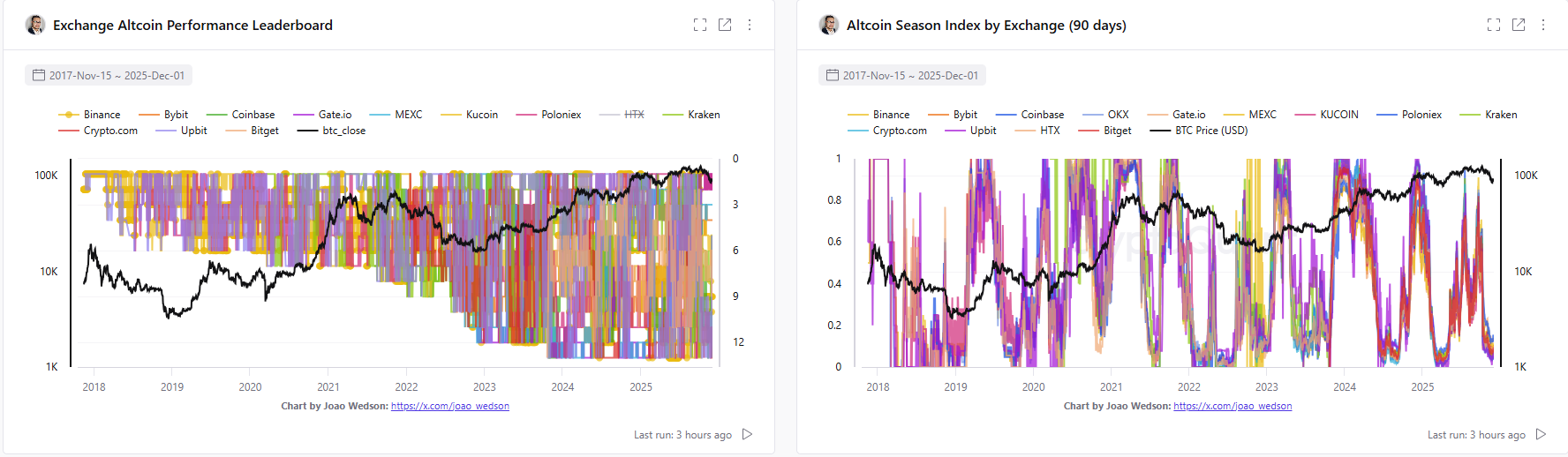
Declining liquidity is a significant risk. As exchanges raise asset quality standards and focus on user protection, tokens that fail to maintain sufficient trading depth are increasingly at risk of delisting.
Binance’s move also shows that the company strictly enforces its listing policy. The platform delisted FLM, KDA, and PERP in November 2025, highlighting the updated standards. Projects that lack strong development, adequate trading volume, or security face continuous review.
Users with affected tokens have until February 16, 2026 to close their positions and withdraw their assets. Binance may convert the remaining balance to stablecoins after February 17th, but this is not guaranteed.
Although the delisting schedule provides time for an exit, reduced liquidity elsewhere could make selling difficult.
