




The Binance-backed BNB Chain has set a long-term goal of processing 1 million transactions per second while rebuilding its underlying architecture and integrating protocol-level privacy.
The strategic pivot aims to capture two different but demanding emerging markets: traditional financial institutions and the emerging sector of autonomous artificial intelligence agents.
This aggressive technology roadmap reaches a critical juncture for the network, which has faced significant headwinds over the past year.
BNB, the network’s native token, has fallen more than 35% this year to $563, its lowest valuation since October 2024, according to CryptoSlate data.
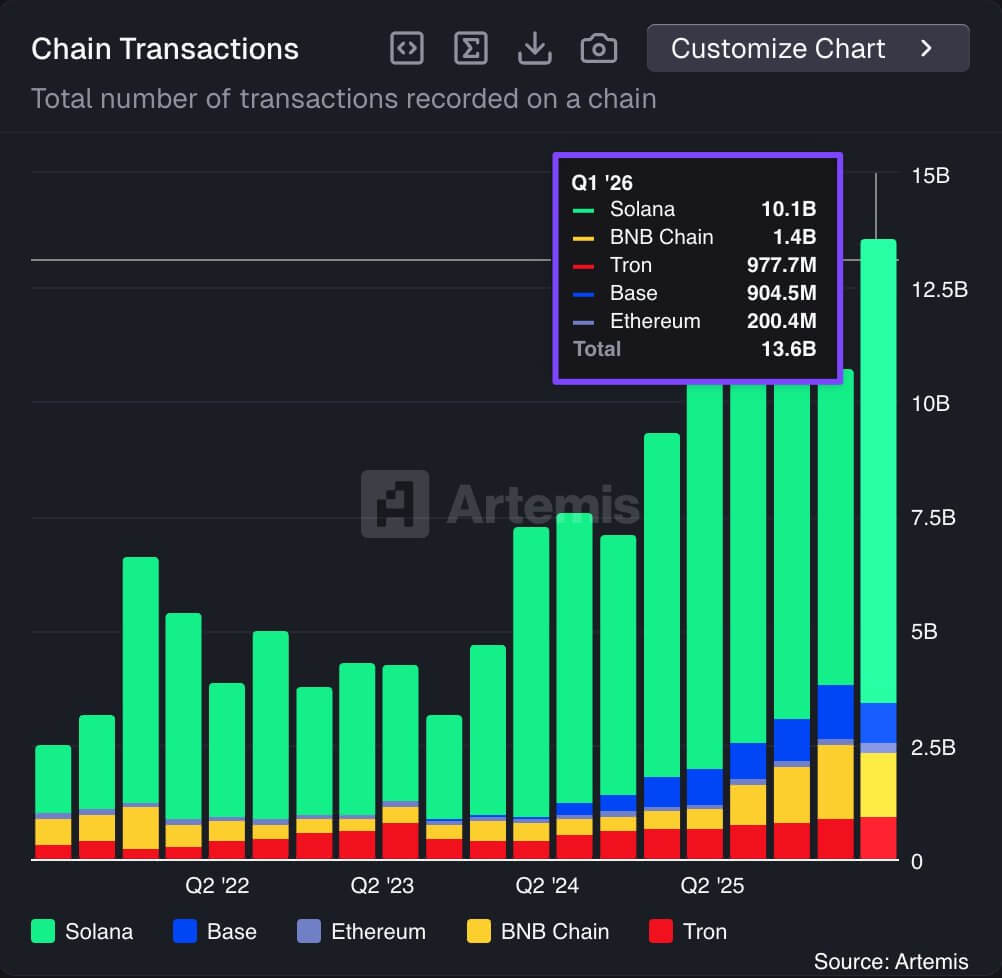
Additionally, the company’s network activity has also lagged behind some rivals, with BNB chain transactions down 12.5% in the first quarter of this year, while Solana and Ethereum recorded increases of 46.4% and 38%, respectively.
To reverse this trend, network core developers are moving beyond standard consumer applications and building specialized infrastructure aimed at supporting high-frequency trading and machine-to-machine commerce.
Preparing for the AI economy
The main impetus for the network overhaul is the anticipated rise of AI agents. These are autonomous software that can perform financial transactions online without human supervision.

Currently, the AI-powered payments market is still in its infancy. A recent report from Keyrock estimates that autonomous agents settled approximately $73 million in 176 million blockchain transactions between May 2025 and April 2026.
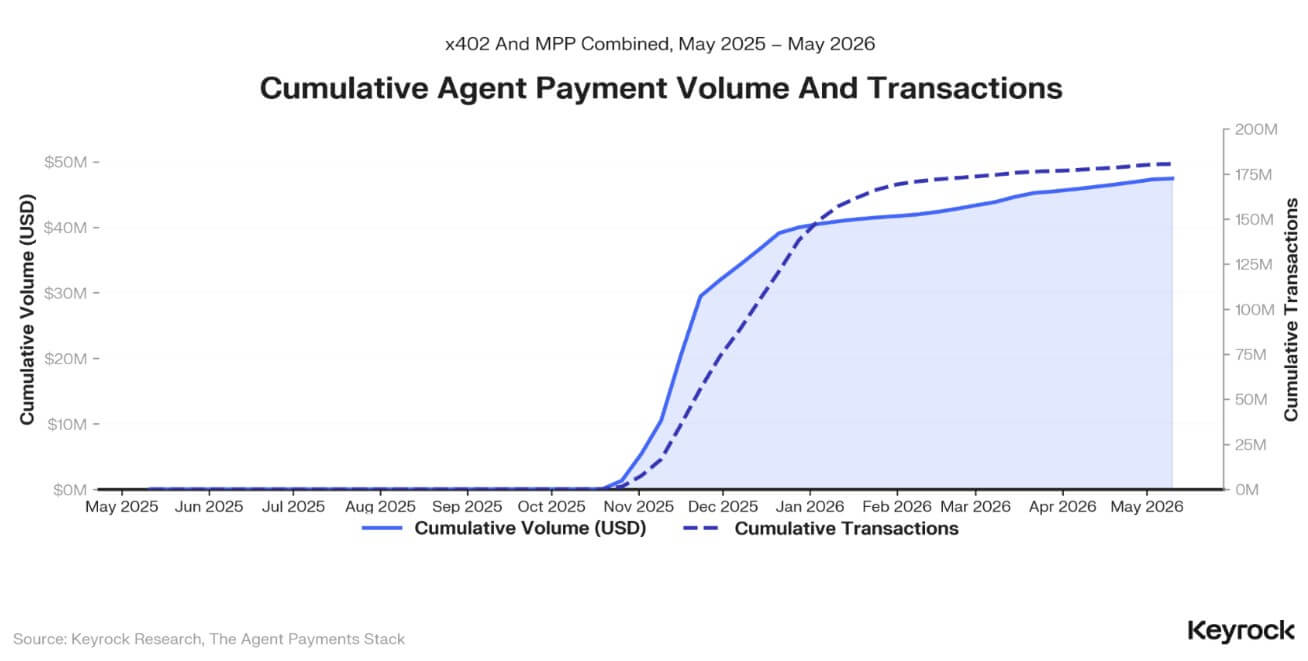
Although this is still relatively small, it does not prevent major technology and financial institutions such as Google, Coinbase, and Visa from aggressively introducing competing systems for agent commerce.
Their operational theory is that AI agents will procure digital services in micro-increments in real-time. However, today’s standard payment rails and existing blockchains are poorly equipped to handle software systems that make thousands of small-value purchases per minute.
This potential bottleneck supports the rapid growth forecast for the industry, with McKinsey estimating that retail agency commerce could reach up to $5 trillion by the end of the decade.
To capture this anticipated volume, BNB Chain recently launched BNB Agent Studio and a dedicated software development kit.
These middleware tools integrate with large-scale language models and cloud services such as AWS Bedrock, allowing developers to deploy autonomous on-chain agents with ready-made payment infrastructure.
BNB chain moves to native privacy
Demand for on-chain privacy has increased over the past year as public blockchains expose more financial activities to public scrutiny.
Wallet balances, transaction history, and trading patterns are visible by default on most major networks. That transparency helps with audits and market surveillance, but also allows competitors, analytics firms, and external monitors to track transfers in real time.
This is becoming a bigger concern as institutions move more assets on-chain. Market makers who settle tokenized assets, transfer funds in collateral, or move inventory may not want their counterparties, balances, or trade routes to be publicly visible.
BNB Chain seeks to meet that demand by adding native privacy features. The network has developed Confidential Transactions and Selective Disclosure to help users protect sensitive data while providing the information needed for audits, compliance checks, and regulatory reporting.

Zero-knowledge proofs are expected to play a central role. This technology allows you to validate transactions and policy checks without exposing the underlying data, allowing you to prove that activity complies with required rules without exposing all details.
On the other hand, demand is not limited to institutions. Cryptocurrency users have also become more concerned about financial privacy as blockchain analytics, centralized exchange reporting, and government-backed e-money projects expand the amount of transaction data that can be monitored.
This has moved the industry beyond the old privacy coins, many of which are still under regulatory pressure.
As a result, blockchain networks like Ethereum are now building confidentiality directly into their smart contract infrastructure, allowing developers to support private transfers, lending, staking, payroll, and tokenized asset settlement without having to move their activities to a separate ecosystem dedicated to privacy.
For BNB Chain, the commitment to privacy is part of the same strategy behind its speed and AI agent upgrades.
The network is building an infrastructure for higher-value activities where users require faster payments while also requiring greater control over their exposed financial data.
BNB Chain’s new L1 design brings together speed, privacy, and quantum security
To accommodate these features, BNB Chain’s long-term plan is to deploy these new features. Within a new layer 1 architecture designed for expanded use cases. Go beyond current design.
The proposed network starts with a goal of over 100,000 transactions per second and is supported by co-optimized consensus, parallel execution, and LtHash-based storage. Its long-term design goal is 1 million TPS, a number that brings developers closer to the network capacity they need for high-frequency trading, automated payments, and institutional payments.
The architecture also targets sub-50ms transaction pre-confirmations and sub-second block finality. These latency goals are critical for trading venues and AI agents, as automated systems require faster confirmation times than many general-purpose blockchains can reliably provide.
One of the most important changes is TxStream. This design eliminates the public memory pool by sending transactions directly to the block leader.
Using a public mempool allows you to view pending transactions before confirmation, creating an opportunity for trading bots to front-run or re-order. Although direct routing reduces that risk, it does not eliminate all forms of transaction order risk.
The new chain will also include PriorityLane, which reserves block space for critical operations such as oracle updates, bridge trades, and clearing during times of market stress.
This feature is designed to keep critical infrastructure up and running when time-sensitive transactions are delayed due to volatility or congestion.
BNB Chain also plans an account abstraction suite that will allow developers to support gas fees, batch transactions, execution scheduling, and passkey signing. The goal is to make blockchain applications easier to use while providing a way for AI agents and institutions to have more flexible control over permissions and transaction limits.
The network is expected to reach testnet by late 2026, with mainnet expected in early 2027.
The last part of the roadmap goes beyond performance. BNB Chain developers are researching post-quantum cryptographic defenses, reflecting a broader movement in the industry to prepare for quantum computers that could eventually undermine current public-key cryptographic systems.
The effort focuses on hybrid protection that layers quantum-resistant cryptography onto existing systems, rather than forcing users to make an abrupt transition. Developers are also researching how account abstraction can allow users to adopt quantum-secure protection without changing addresses or disrupting existing applications.
That research is becoming more urgent across the technology field. Cloudflare has changed its full post-quantum security goal to 2029, while Microsoft has said it aims to enable early adoption of quantum safety features across its products and services by 2029, before completing a broader transition by 2033.
In the case of the BNB chain, quantum work adds a long-term security layer to the same institutional pitch behind the rest of the overhaul.
If a network wants to support private payments, tokenized assets, AI agent payments, and high-frequency trading, it must demonstrate that its infrastructure can handle both near-term scale and future crypto risks.
