




As global demand for technology talent grows, UNICEF partners with Bitget and the global technology industry to expand access to 21st century skills for young people in eight countries
Adolescent girls in Cambodia are preparing to succeed in the digital economy through the unexpected gateway of video game development. Developed by UNICEF’s Innovation Directorate, the Game Changers Coalition is an initiative designed by and for girls to give young people across the country hands-on experience in coding, storytelling, design and financial literacy concepts – skills essential to succeeding in Southeast Asia’s rapidly evolving technological landscape.
Despite the growing demand for digital talent, girls and women remain underrepresented in technology. Structural barriers limit access to acquiring digital skills, professional networks, and new technology tools. UNICEF and partners are working to change this.
sponsored
With support from Bitget, the world’s largest universal exchange, and the Global Video Games Coalition and Micron Foundation, UNICEF is scaling up a comprehensive youth-centered digital learning program aimed at building confidence, capacity and long-term economic resilience.
Bitget’s Chief Marketing Officer Ignacio Aguirre visited Cambodia to share his experiences with teachers and students participating in the coalition.
Bitget CMO Ignacio Aguirre receives award
The visit included special time with one of the Cambodian teams that won the first global UNICEF Game Jam, a virtual hackathon that unites young creators from eight participating countries of the UNICEF coalition. Cambodia emerged as one of the strongest participants, winning four of the seven categories at the global award.
“I am inspired by the determination and talent of Cambodian youth. At BitGet, we believe everyone should be equipped to participate in the digital world, from coding and design to emerging fields like blockchain. We are very excited to see this generation of young digital creators hone their skills and help shape an inclusive, fair and prosperous digital future,” said Ignacio Aguirre.
sponsored
play video games in the booth
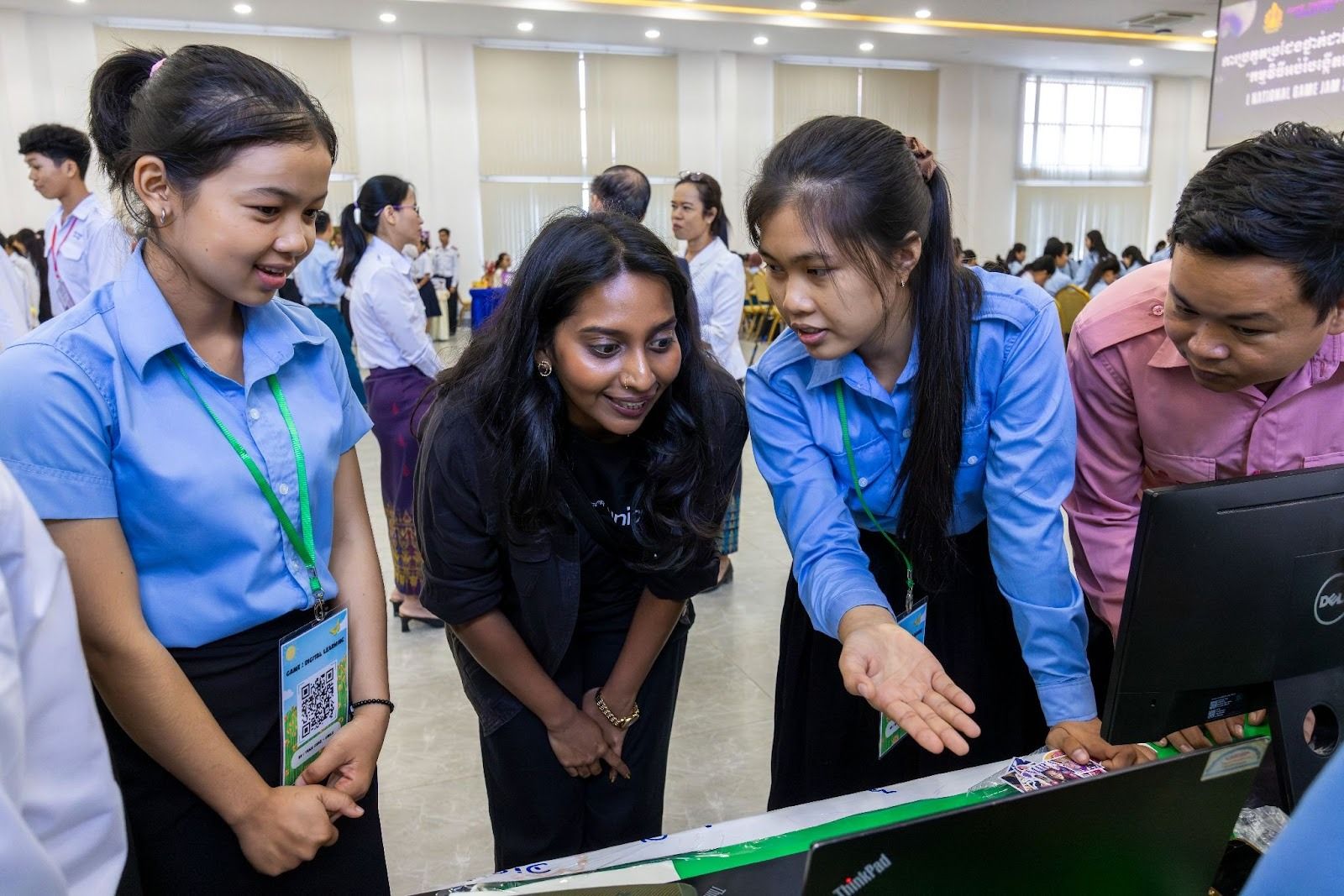
In a cross-generational exchange of insights and experiences, participants shared their creative processes, the stories rooted in the cultures and communities that inspired their games, and the skills they were proud to have acquired.
“Besides learning how to write code, we learned how to draw pictures, develop stories, find solutions when we encounter problems, and study to understand those problems step by step. We also learned how to work in teams and understand each other better. “Before I joined Game Changers, I thought games were just for entertainment. Now I see that games can solve real-life problems. I want to continue creating things that make the lives of my community better.” said Rachuna, a 16-year-old young video creator. A member of Green Ever, the winning team of the global UNICEF Game Jam.
At the National Game Jam in Phnom Penh, co-hosted by UNICEF and the Cambodian Ministry of Education, Youth and Sports (MoEYS), more than 600 students aged 10 to 18, of whom more than 65% were girls, from 14 schools in 11 provinces completed a six-week customized learning journey to present and pitch their original video games to a panel of expert judges. Their projects are based on personal experiences and issues impacting their communities, and demonstrate the role of creative technology in empowering young people to become problem solvers and digital creators.
sponsored
“Every year, millions of girls around the world miss out on opportunities in the digital economy because they don’t have access to the skills and networks they need to thrive. In Cambodia, innovative learning approaches such as video game development are breaking down barriers and increasing digital inclusion and confidence for students of both genders. Young people, including those from hard-to-reach communities, are beginning to realize that they belong in these spaces and that their ideas matter,” said Dr. Will Parks, UNICEF Country Director in Cambodia.
“This initiative puts girls at the center of Cambodia’s digital transformation. By closing the gender gap in digital education and ensuring equal access to cutting-edge learning opportunities, we empower girls to become creators, innovators, and leaders in the digital age. Through coding, problem-solving, and teamwork, girls They will develop skills in critical thinking, leadership, and digital literacy, preparing them to meaningfully contribute to the country’s development.The girls who design games today are the software engineers, digital entrepreneurs, and technology leaders of tomorrow who will drive Cambodia’s social economy forward.”
Globally, the coalition aims to reach 1.1 million people in 12 countries by 2027, contributing to UNICEF’s global goal of expanding learning and skill-building opportunities for girls. This initiative continues to grow with support from governments, civil society and private partners.
This press release was produced in collaboration with UNICEF.
sponsored
Available multimedia assets X.
The UNICEF Game Changers Coalition builds on UNICEF’s existing work to equip girls with digital and 21st century skills through the Skills4Girls initiative.
About biget
Founded in 2018, Bitget is the world’s largest universal exchange (UEX), providing more than 120 million users with access to cryptocurrencies, tokenized assets, and AI-powered trading tools across major blockchains. Its ecosystem includes Bitget Wallet, an everyday financial app used by over 80 million people. Bitget is driving global cryptocurrency adoption through partnerships with LALIGA, MotoGP™, and UNICEF.
About UNICEF Office of Innovation
The UNICEF Office of Innovation works with a global network of thinkers, enablers and doers to identify and accelerate the scale of truly innovative solutions and approaches that address global challenges that impact the lives of children.
