




Bitcoin price remains under continued pressure and is struggling to regain the $70,000 level. BTC is still shrouded in a persistent downtrend, limiting any attempts at upside for several weeks.
Historical cycle data and current on-chain signals suggest that the bearish situation may not be over. Despite a short-term rally, structural indicators suggest that Bitcoin may remain capped below $70,000.
Bitcoin’s past says it continues to be under pressure
The Pi Cycle Top indicator provides important context about Bitcoin’s current phase. This indicator uses a 111-day moving average and twice the 350-day moving average. When these averages converge, the market is considered overheated.
Conversely, if the moving averages diverge by a large amount, the asset is often considered undervalued. In the current cycle, Bitcoin does not exhibit either extreme trend. Rather, it appears to be at the midpoint of a broader bearish phase.
Historically, mid-cycle bearish periods within Bitcoin’s four-year cycle have lasted more than a year. There was a similar structure in past cycles, where BTC remained suppressed until it finally recovered.
The current divergence between the 111 SMA and 350 SMA x2 suggests a bearish continuation rather than a recovery.
Want more token insights like this? Sign up for Editor Harsh Notariya’s Daily Crypto Newsletter here.
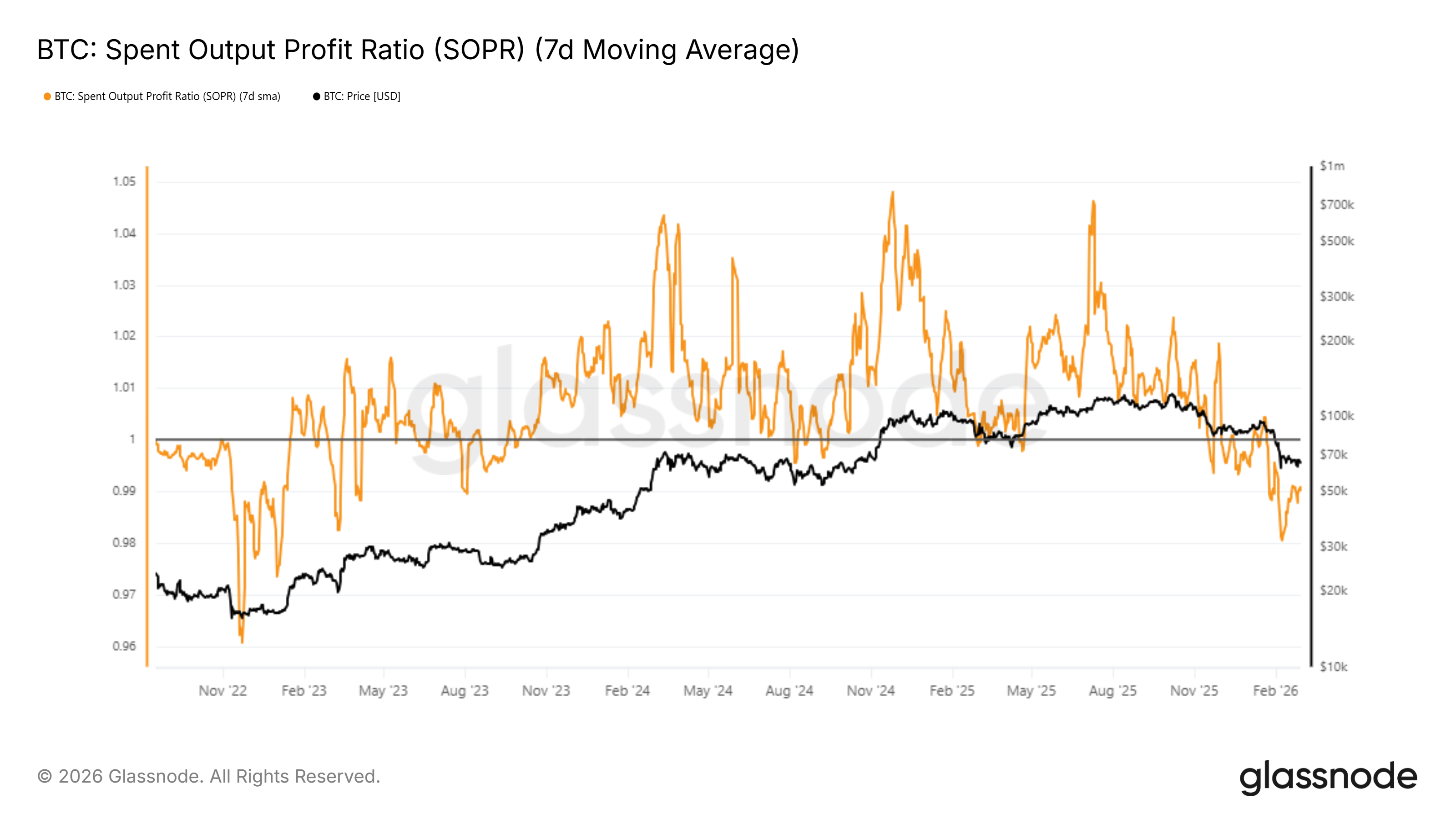
Return on output as spent further supports the cautious outlook. SOPR remains below the critical 1 level, indicating that many investors are selling at a loss. Persistent values below 1 indicate limited profitability for market participants as a whole.
This dynamic inhibits recovery attempts. Bitcoin investors selling at a loss often reflects fear-based behavior. Until SOPR consistently rises above 1, Bitcoin price may struggle to build sustained upward momentum.
The downward trend of BTC price continues
At the time of writing, Bitcoin is trading at $66,443, still stuck below active descending resistance for nearly a month. Repeated failure to break through this barrier highlights ongoing weaknesses. Without stronger buying pressure, BTC is likely to remain trapped below this trendline.
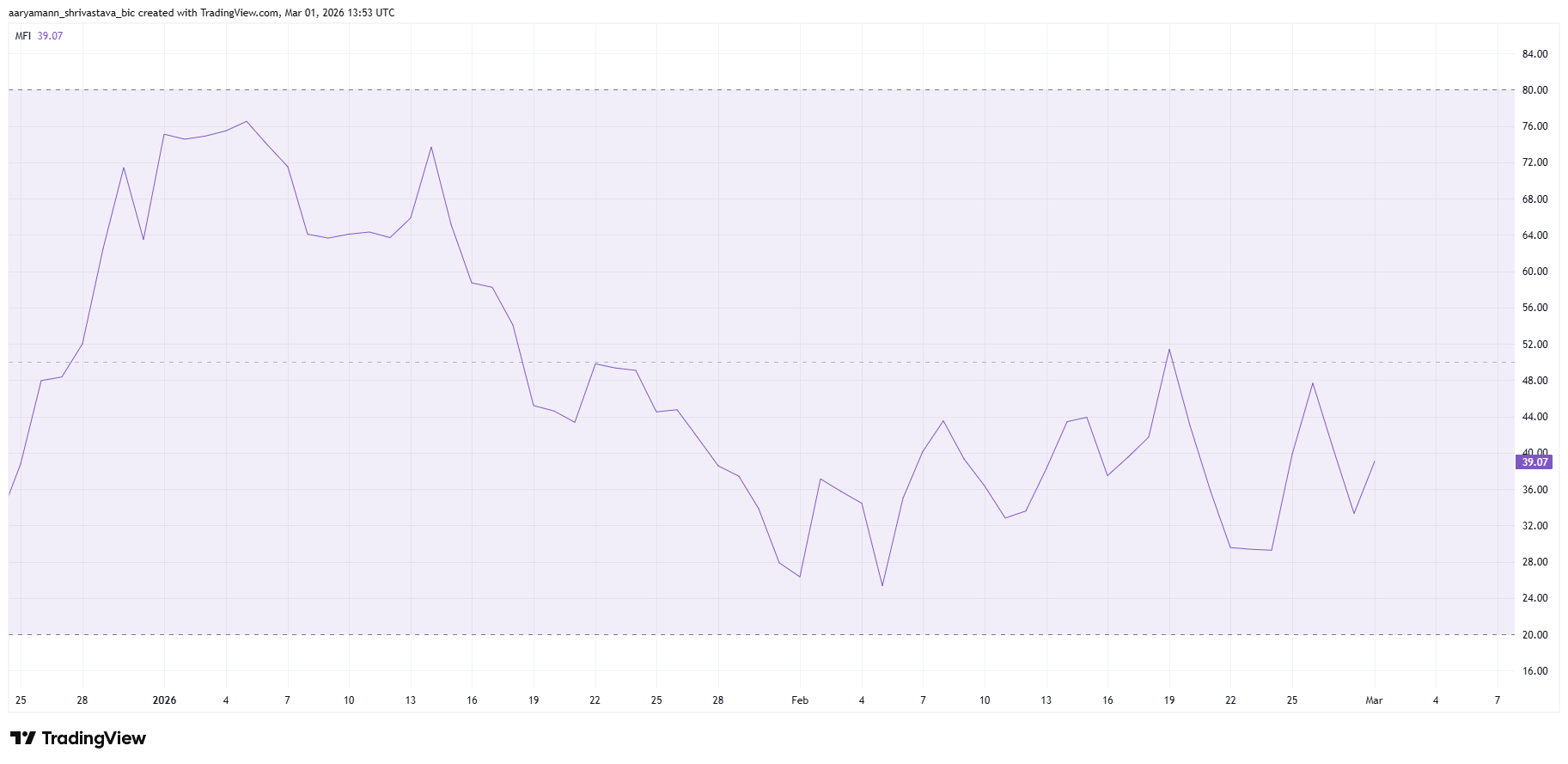
Money flow indicators are showing active selling pressure. MFI measurements show that capital outflows continue to exceed inflows. Global macro uncertainty and geopolitical tensions are driving risk aversion. This environment encourages careful positioning and limits aggressive accumulation.
Given this situation, Bitcoin prices may continue to fluctuate within a limited range. A break below $65,000 could expose the support at $62,893. This level has already been tested twice this week, making it more vulnerable if the sell-off strengthens.
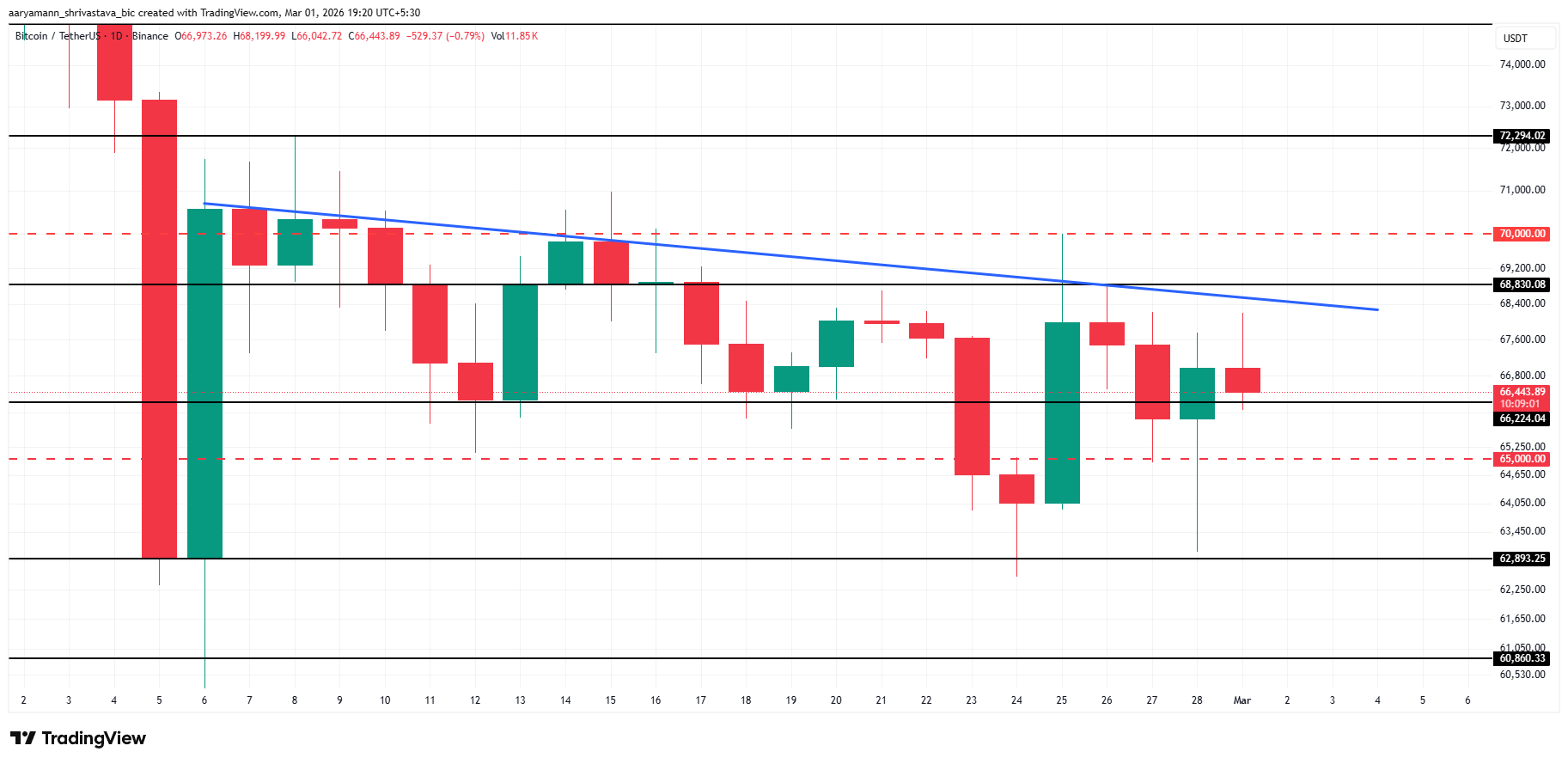
However, changes in macro psychology could change the trajectory. If Bitcoin holds the support at $66,224 and attracts fresh inflows, it could challenge the resistance at $68,830.
A decisive move above $70,000 would invalidate the current bearish theory and indicate new structural strength.
