



U.S. stocks rallied and then corrected as the S&P 500 rose to $6,976. Earlier this week, the benchmark index briefly rose in subsequent trading after closing just short of its all-time high, but the stock market’s risk appetite stood in sharp contrast to the continued weakness in the overall crypto market.
At the same time, selling pressure accelerated as broader capital flows favored traditional risk assets, causing Bitcoin to continue to underperform. This divergence has become more pronounced in recent sessions, with the chasm between stocks and crypto sentiment widening further.
Sponsored Sponsored
AI stocks and small-cap stocks drive stock price momentum
The S&P 500’s recent rally was led by large-cap technology and semiconductor stocks, with investors returning to AI stocks after a brief pause due to valuation concerns.
Alphabet set a new record, Amazon beat profits, and semiconductor makers posted broad-based gains on strong demand expectations.
Behind the scenes, the market has also expanded. Small-cap stocks have outperformed large-cap stocks, with the Russell 2000 up about 3% since the beginning of the year.
This relative strength is often interpreted as a sign of confidence in domestic growth and supports broader stock market forecasts that suggest continued upside as long as earnings momentum continues.
Sponsored Sponsored
Earnings, not valuations, support rising markets
Corporate performance continues to be the central driver of market development. Analysts now expect earnings growth for S&P 500 companies to reach nearly 11% in the December quarter, a significant increase from their expectations in early January.
More than 80% of reporting companies beat previous expectations, according to FactSet data cited by market strategists.
According to a recent study, earnings growth accounted for about 84% of the S&P 500’s overall revenue this period, indicating a shift away from multiple expansions as the main driver of earnings. This shift has made it more likely that profits and cash flow will justify price increases, allaying fears surrounding an AI-driven bubble.
Macro context sustains risk appetite
The broader macro environment has supported equity risk-taking to date. US GDP growth remains at around 3.3%, inflation trends are relatively subdued, and productivity indicators are improving. Political turmoil, including a federal government shutdown that delayed the release of critical data, did not significantly undermine market confidence.
Sponsored Sponsored
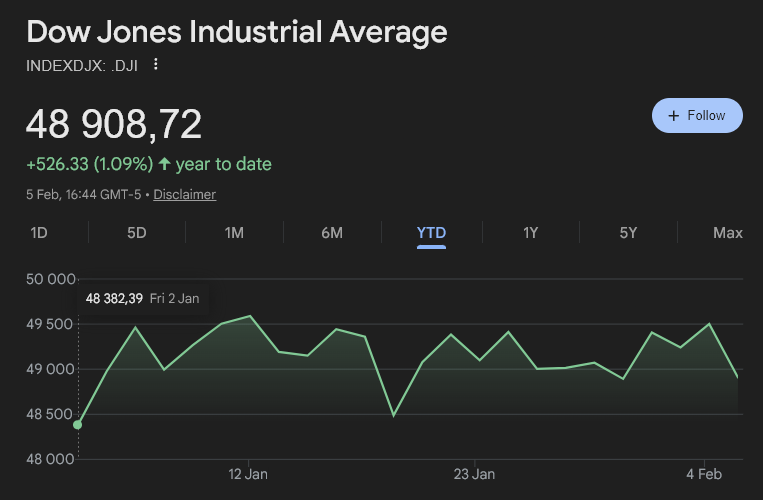
The major U.S. indexes posted solid gains along with the S&P 500, with the Dow Jones Industrial Average up more than 1% since the start of the year. However, the Nasdaq Composite fell about 2.6%.
Investors are now looking to upcoming economic data and the Federal Reserve’s next policy signal to ensure that financial conditions remain supportive.
Bitcoin weakness highlights differences between markets
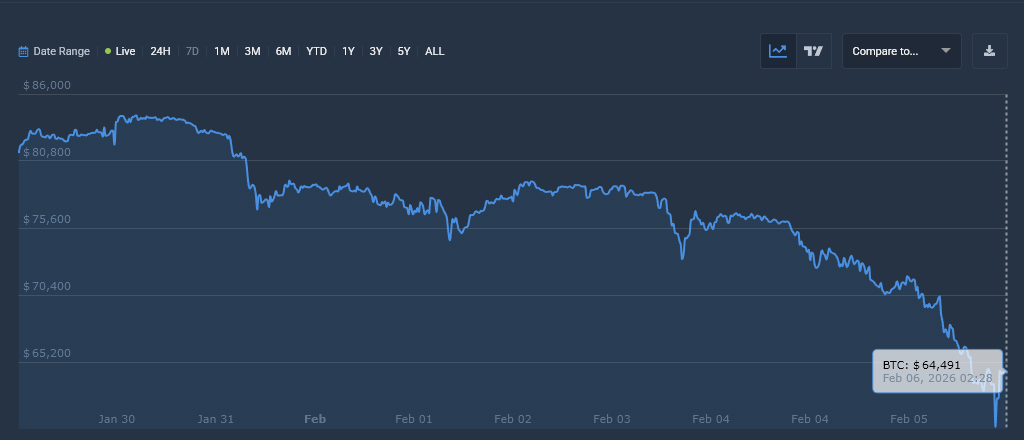
While the stock market rose, the cryptocurrency market moved in the opposite direction. Bitcoin prices fell below $65,000, hitting their lowest level in nearly a year, extending a broad downward trend weighing on the digital asset.
Sponsored Sponsored
The decline occurred amid a decline in momentum, a decline in speculative appetite, and a rotation into equities that provide measurable earnings growth.
This contrasting performance reflects the growing divergence between traditional risk assets and cryptocurrencies, at least in the short term.
Both markets can benefit from a liquidity-driven rally, but the current situation favors assets more directly tied to corporate profits.
outlook
The S&P 500 index’s rise to new highs reflects a rally increasingly rooted in profit realization rather than valuation expansion. AI investing, small-cap strength, and resilient macro data continue to support upside, even as record levels prompt selective caution.
Bitcoin’s fall to a one-year low highlights a weakening of risk appetite, but for now, equity markets remain firmly in control of the broader risk narrative.
