




The Russell 2000 index hit a new all-time high in January. This jump not only reflects the strength of U.S. small-cap stocks, but also has important implications for the cryptocurrency market, especially altcoins.
Meanwhile, other data points show that altcoin investor sentiment is improving. Market participants are increasingly hopeful of a recovery this quarter.
sponsored
Strong correlation between the Russell 2000 and the virtual currency market
The Russell 2000 tracks approximately 2,000 small-cap U.S. companies. These stocks represent risky assets in traditional financial markets.
When an index leads the market higher, it often indicates that capital is moving toward riskier assets. Investors tend to accept more risk in pursuit of higher returns.
“The Russell 2000 index has hit a new high since the start of U.S. trading. The index has gained 7% in the first 15 days of 2026, adding nearly $220 billion in market capitalization, indicating a clear rotation of capital into riskier assets,” Bull Theory reported.
Hedgeye analysts added that the Russell 2000 index outperformed the S&P 500 index for the ninth day in a row. This is the longest streak since 2017.
sponsored
A graph comparing crypto market cap to the Russell 2000 highlights the strong alignment over the past two years. The local highs and lows of the index roughly correspond to the peaks and troughs of the total valuation of the cryptocurrency market.
As a result, the index hit new highs, raising expectations that the crypto market could soon hit new highs as investors become more open to risk.
“This is bullish for altcoins,” investor Ash Crypto commented.
Other analysts have used this signal to predict altcoin appreciation rates ranging from 20% to 5x.
sponsored
Altcoin buy/sell (long/short) ratio continues to rise in January
At the same time, the buy/sell (long/short) ratio of most altcoins is currently above 1. Data analytics platform Alpharactal sees this as a sign that long positions are dominating the market.
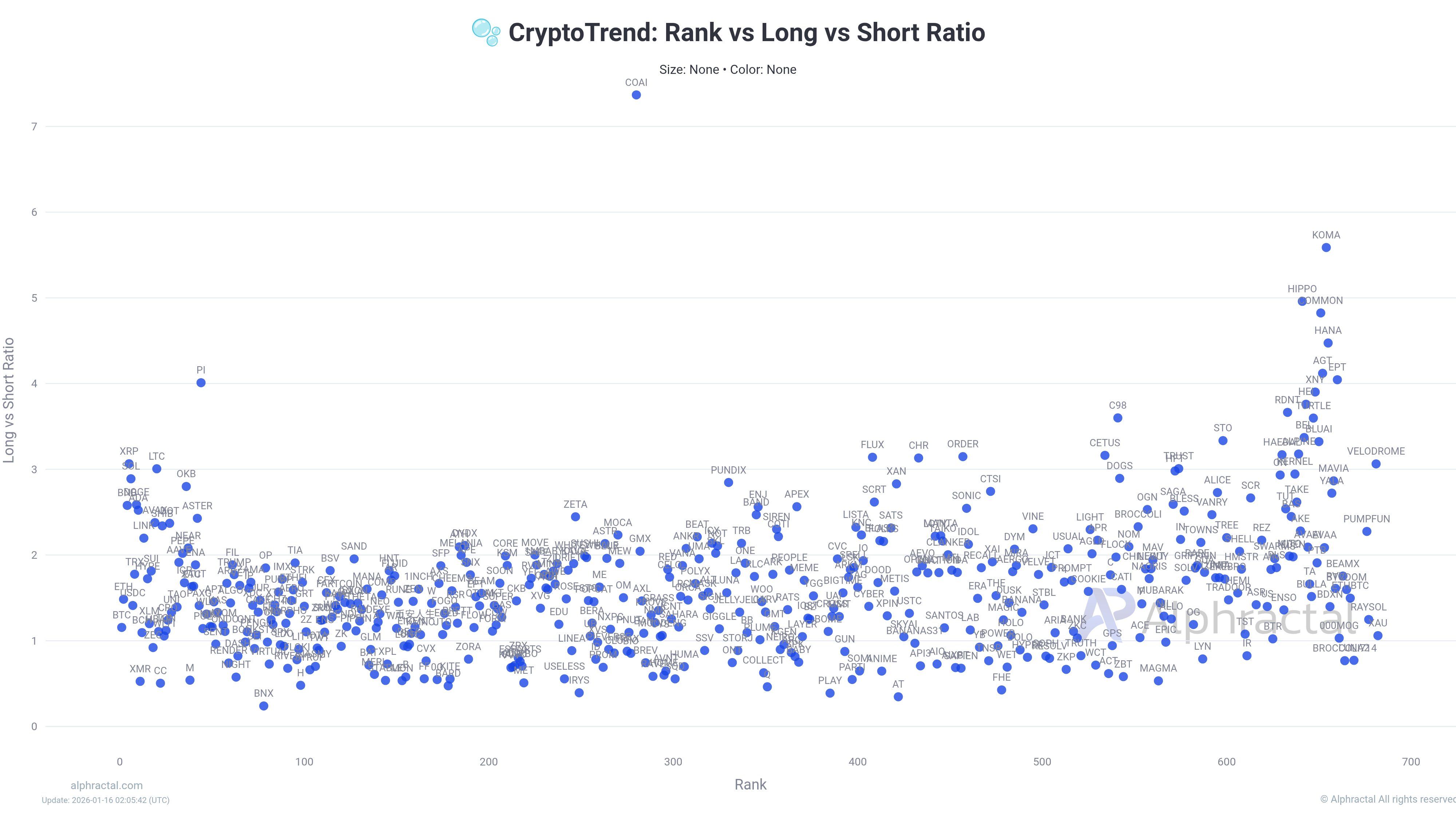
This graph shows that top altcoins with generally smaller market caps tend to have even higher ratios. This pattern suggests that traders are taking on more risk, reflecting growing confidence in the altcoin’s recovery.
sponsored
“As market capitalization declines, a broader pattern emerges where long-side bias increases. This setup often precedes volatility and long-side pressure,” Alfaraktar noted.
From a psychological perspective, many altcoins are already down 80%-90%. A loss of this magnitude reduces the incentive for underwater holders to sell and to continue holding. On the other hand, investors with sufficient capital often view these levels as attractive buying opportunities.
However, even if altcoin season arrives, it is unlikely that all tokens will rise. Analyst CW cited Binance altcoin netflow data from CryptoQuant and warned that while some altcoins are accumulating heavily, others may face selling pressure.
Altcoins that maintain the trust of their holders and continue to exit exchanges tend to have stronger upside potential. In contrast, tokens whose holders continue to send them to exchanges for liquidity may similarly underperform.
