




Short-term derivatives traders held long positions in multiple altcoins as of the end of December. But without a strict stop-loss plan, these positions could face liquidation risk as early as January.
Which altcoins are at risk and why can they cause large liquidation losses? The analysis below explains more.
Sponsored Sponsored
1. Solana (SOL)
Solana’s 7-day liquidation map shows a severe imbalance. The cumulative total of long-term liquidations significantly exceeds short-term liquidations.
Long traders have a rational reason to hold SOL positions at this stage.
According to a report by BeInCrypto, January has historically been a strong month for SOL’s price performance. Additionally, a bullish RSI divergence confirmed expectations for a potential recovery.
Long traders can realize unrealized gains within a few days. However, without a profit-taking plan, these long positions can be vulnerable.
The SOL ETF just posted its weakest weekly inflows since launch, according to SoSoValue data. Last week’s net inflows were only $13.14 million. This number was down more than 93% from its launch week of about $200 million.
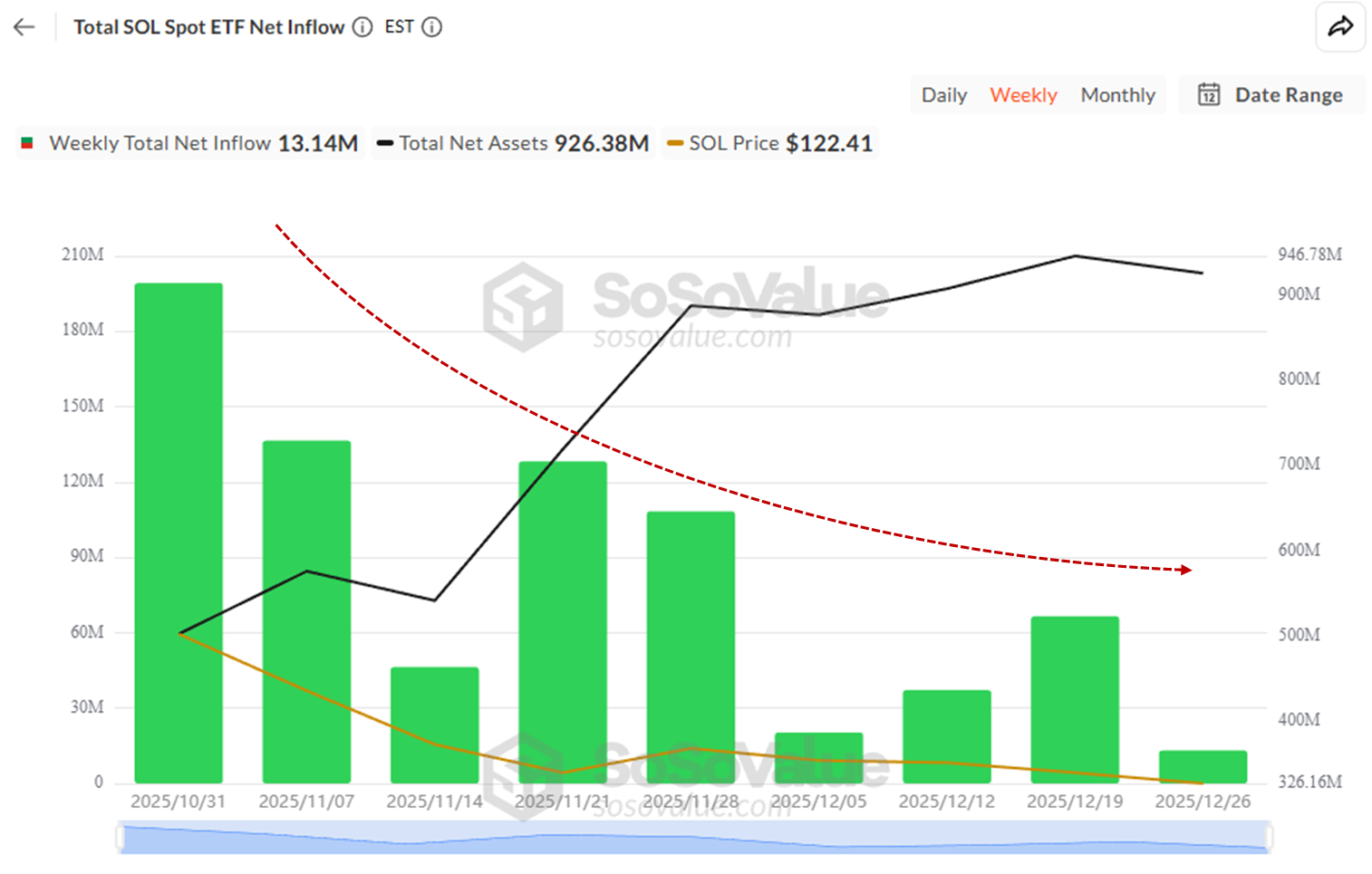
Although there have been no weeks with negative net flows so far, this sharp decline strongly suggests weaker ETF demand for SOL. This trend could weigh on SOL prices in early January.
Sponsored Sponsored
Therefore, you need to be careful with long positions. If SOL falls to $110, cumulative long liquidations could exceed $880 million.
2. Zcash (ZEC)
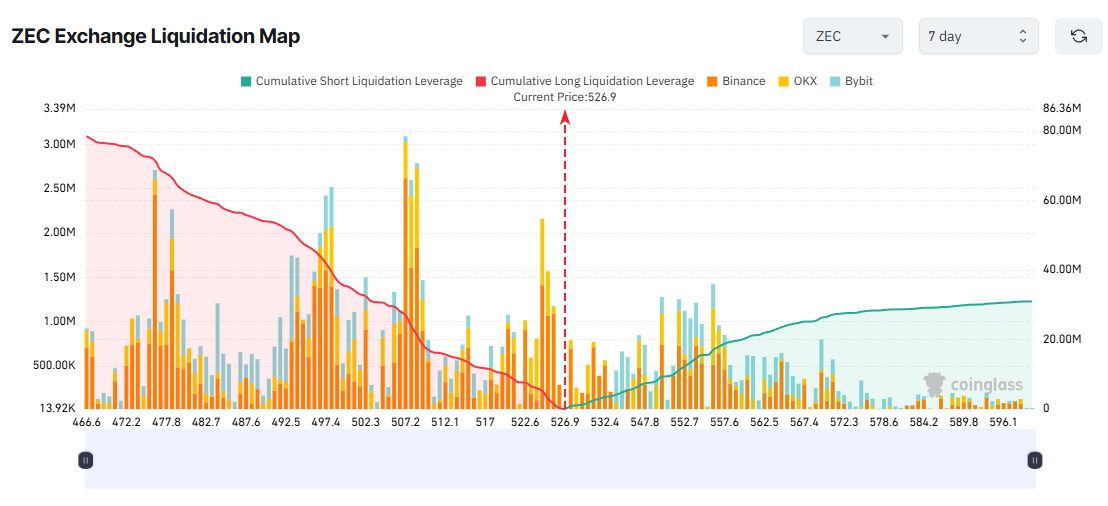
Similar to SOL, ZEC’s liquidation map shows traders heavily allocating capital and leverage to long positions.
ZEC trapped in the shield pool increased again in late December. ZEC’s price also rebounded significantly in the same month, rising from around $300 to over $500. These factors support the case for holding long positions.
Sponsored Sponsored
However, there can be risks if traders act too aggressively. After rising more than 70% in December, ZEC may correct from a technical perspective. It would be normal price action to pull back to retest previous resistance levels as support.
Profit taking by buyers in early December could prompt this correction. Such selling pressure poses the risk of liquidating long positions.
Additionally, a recent BeInCrypto report suggests that ZEC whales are reducing their exposure. This behavior reflects a heightened sense of alertness following a rapid recovery.
If ZEC falls to the $466 zone in early January, the liquidation value of long positions could exceed $78 million.
Sponsored Sponsored
3. Chain Link (LINK)
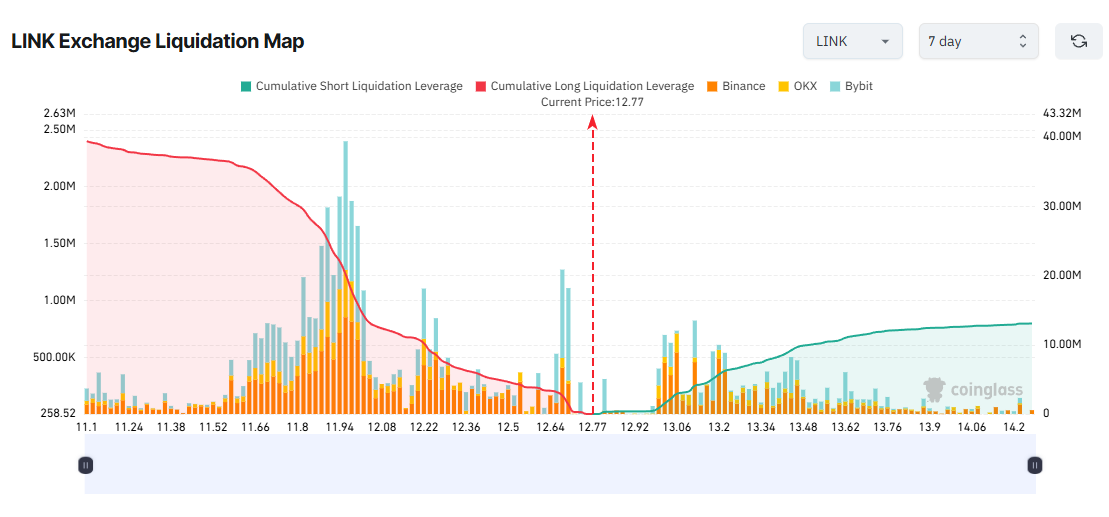
Many traders seem confident that LINK will recover from the current $12 level soon. They put a lot of capital and leverage into long positions.
“LINK is holding in the demand zone and is starting to stabilize. As long as this support holds, the price has room to rise towards $13.5, $14, and $15. A break below $11.5 would invalidate this setup and indicate downside risk,” CryptoPulse commented.
There is one important signal worth noting. Binance’s LINK reserves increased throughout December.
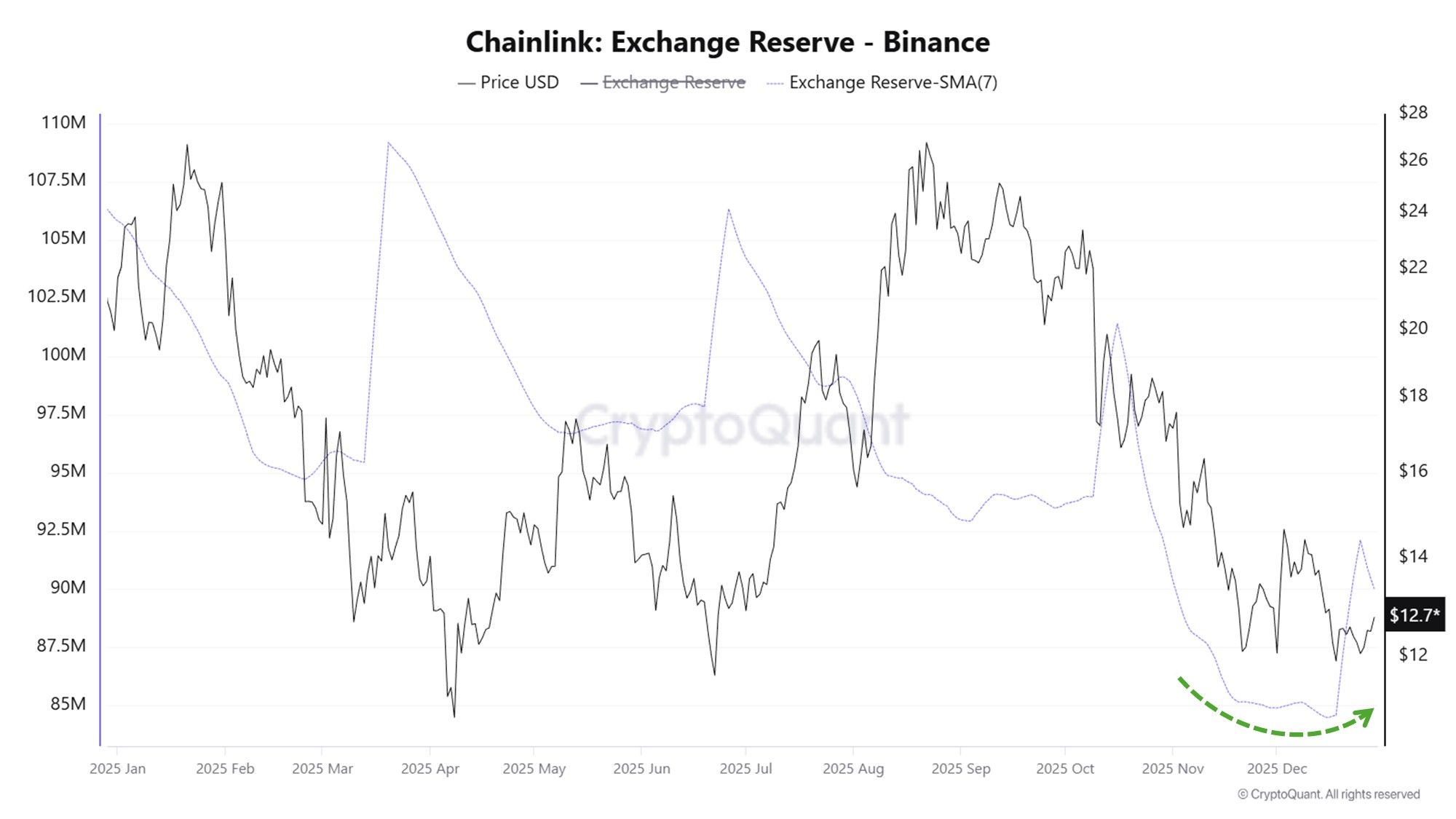
CryptoQuant data shows that Binance’s 7-day average LINK reserves have ended a two-month downward trend. The trend is starting to reverse and rise.
This change suggests that LINK holders may be preparing to sell whenever prices show signs of recovery. According to the liquidation map, if LINK falls to $11, the cumulative long-term liquidation amount could reach approximately $40 million.
