



Bitcoin heads into 2026 with a clear macro risk: President Donald Trump’s tariff policies. In 2025, crypto traders saw tariff headlines move prices as fast as ETF flows.
There are currently several tariff levers in place for the 2026 runway. Some already have dates set. Some rely on diplomacy and legal battles. Either way, you can switch sentiment from risk-on to risk-off within a few hours.
How Trump tariffs will affect cryptocurrencies in 2025
The 2025 tariff hike repeatedly triggered widespread declines in cryptocurrencies overall.
Sponsored Sponsored
After President Trump announced new tariffs on Mexico, Canada, and China in early February, Bitcoin fell to a three-week low of around $91,400. Ethereum has fallen about 25% in three days, with most of the top tokens down more than 20% in a single day as traders rush to reduce risk.
Then came the “Liberation Day” tariff shock in April and the escalation between the US and China. Bitcoin briefly fell below $82,000 during the worst of the risk-off wave as crypto-related stocks fell.
However, cryptocurrencies rebounded after the White House hinted at a possible moratorium. By May, when the US and China agreed to a temporary tariff truce, Bitcoin rose again above $100,000, while ETH soared.
Digital asset funds also saw new inflows during the rescue phase.
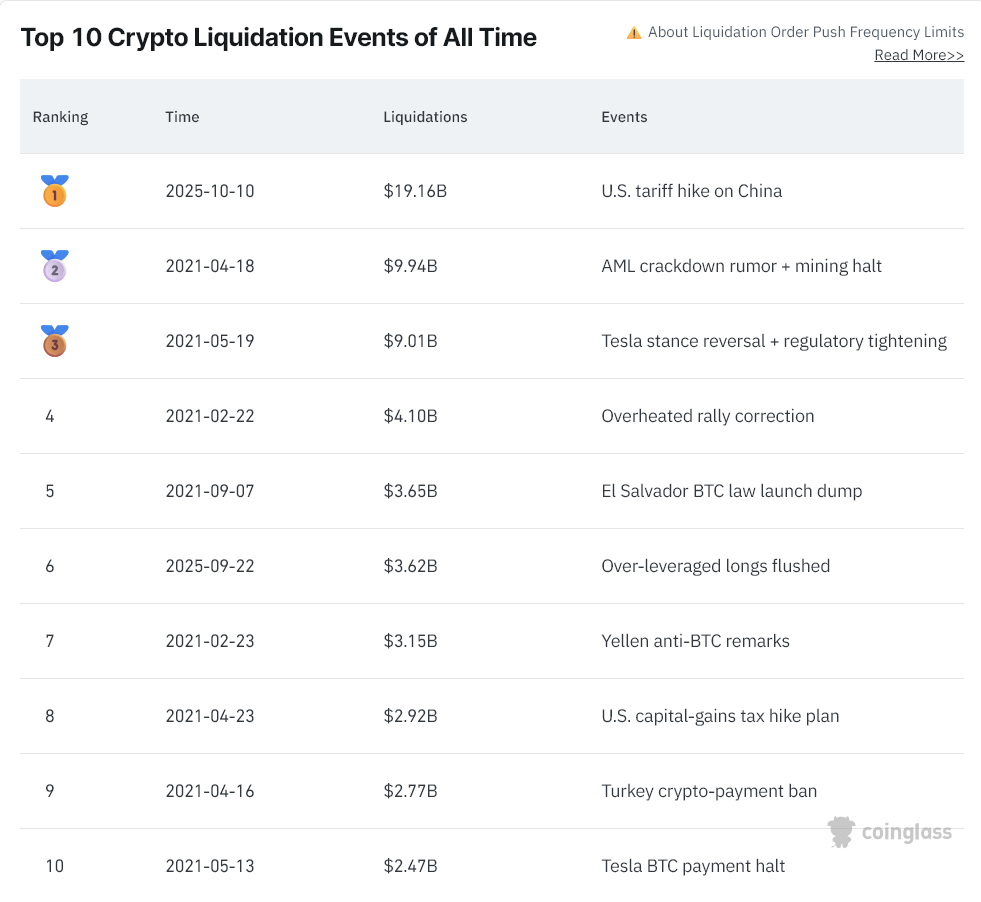
The most severe stress test was conducted in October. Bitcoin quickly fell more than 16% after President Trump announced new 100% tariffs on imports from China related to rare earth tensions.
Liquidations have skyrocketed, with some reports saying $19 billion was lost in one day due to the forced closure of exchanges. As of December 2025, the market has yet to recover from this liquidation shock.
Sponsored Sponsored
1. 100% China Tariff Cliff Postponed
The tariffs would impose a new 100% tariff on all imports from China unless a deal is reached through negotiations. President Trump announced it in October 2025, but then delayed it and focused on late 2026.
If President Trump reimposes policy, markets will likely price in slower growth and more persistent inflation. This combination could hurt Bitcoin by tightening financial conditions, disempowering traders, and pushing down risk assets in tandem.
2. Increase in global standard tariffs
The US president has previously signaled the possibility of raising import duties across the board beyond the 10% threshold that will be imposed in 2025. President Trump also campaigned on a much higher universal tax hike that would perpetuate this risk.
Raising the standard will not be the headline of the day. That will act as a sustained pressure on risk appetite.
In the case of Bitcoin, that typically means buying as rallies get stronger and declines thinner, increasing sensitivity to expected rates.
Sponsored Sponsored
3. Digital services tax retaliatory tariffs for Europe
These are new tariffs targeted at countries that impose digital services taxes and similar rules on U.S. tech companies. President Trump warned that countries that maintain these taxes could face “significant” tariffs in 2025.
If the US hurts exports from the EU or UK, global stock prices could fall. Cryptocurrencies tend to follow that risk-off tape first.
In 2025, this dynamic turned tariff headlines into rapid liquidation-driven reductions.
Sponsored Sponsored
4. Pharmaceutical tariffs could rise towards 200%
The tariffs target imported brand-name and patented medicines and impose penalties on companies that don’t move manufacturing to the U.S. President Trump has signaled that tariffs could become very high in 2025, and cast the policy as a deindustrialization tool.
If interest rates rise towards 200% in 2026, investors could treat that as an inflationary impulse. Bitcoin may attract talk of “hedging” during inflation concerns, but trades often initially go in the opposite direction, selling off risky assets as liquidity tightens.
5. Expansion of secondary tariffs related to sanctioned trade
Secondary tariffs would punish countries that buy oil or products from America’s adversaries, even if those countries are not direct targets. President Trump introduced the concept in 2025 and applied it in a high-profile way.
If President Trump expands this measure in 2026, more countries could be caught in the tariff firefight, increasing global uncertainty.
In the case of Bitcoin, the biggest channel is volatility. Increased uncertainty typically leads to higher volatility, more forced selling, and a slower recovery unless liquidity improves.
