



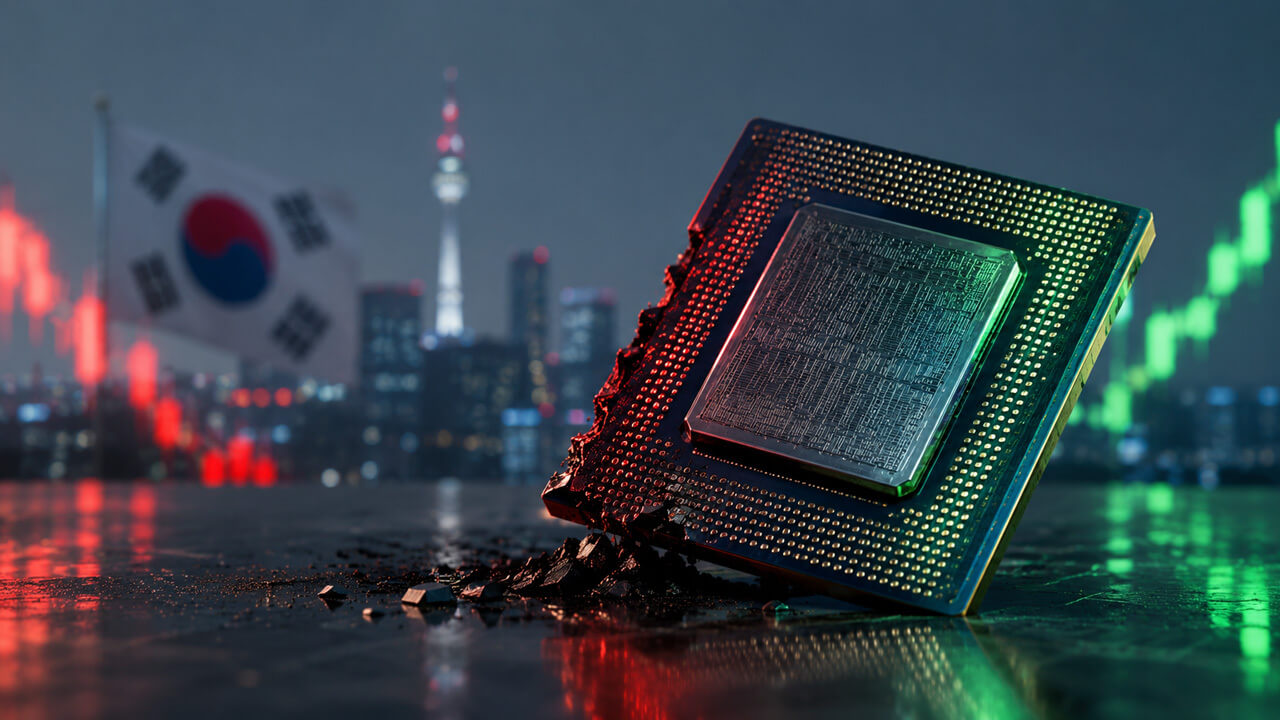
After becoming the best-performing major stock market in 2026 on the back of the AI chip boom, South Korea’s KOSPI suffered the steepest decline in history, but has since recovered almost as fast.
The 48-hour fluctuations show how concentrated global AI trading is and why investors in everything from chip stocks to Bitcoin are exposed to sudden policy shifts from the Federal Reserve.
The numbers we have seen over the past few days are of the kind typically reserved for volatile cryptocurrencies. KOSPI fell 8.29% to close at 7,484.41 on Monday, June 8, after a 20-minute automatic trading halt froze the market, before rising 8.18% to close at 8,096.93 the following day. Over two sessions, the multi-trillion dollar market moved nearly 17%.
KOSPI is South Korea’s main stock index, roughly equivalent to the S&P 500. KOSPI tracks about 950 companies on the Korea Exchange, weighted by size, and this is the main problem. A small number of chip makers, led by Samsung Electronics and SK Hynix, dominate the index.
The index’s total value had ballooned to more than 7,000 trillion won (about $4.6 trillion) at its peak in early June, and the Korean market is betting directly on the global AI hardware cycle. Monday’s plunge wiped out more than 554 trillion won (about $360 billion) in one day.
How the world’s hottest AI market started swinging like cryptocurrencies
This execution was built almost entirely on AI. KOSPI rose about 92% in 2026 due to demand for AI hardware, rising chip prices, and data center construction competition, with Samsung and SK Hynix accounting for about 72% of the increase. When a market is heavily dependent on two stocks, those same stocks tend to push everything down when the mood changes.
The trigger came in Washington, where the May jobs report released on June 5 was positive, with U.S. payrolls increasing by 172,000, compared to expectations of nearly 85,000, the strongest increase in employment in 18 months. Strong hiring gives the Fed less reason to cut interest rates, and when rates rise, expensive, fast-growing tech companies are hit hardest. This is because much of a company’s value depends on profits several years in the future.
Chipmaker Broadcom then fell about 13%, predicting AI sales to be weaker than Wall Street had hoped, sending the main U.S. chip index down more than 10% on Friday. At the start of trading in Seoul on Monday, Samsung and SK Hynix were down about 10%.
And the borrowed money turned an already bad day into one that brought the market to a halt. South Korean retail traders piled on leveraged bets on the semiconductor giant, pushing margin debt to a record 37.74 trillion won (about $25 billion).
If the price falls relative to the money you borrow, your broker will ask for more cash, forcing you to sell more, and the price will fall even further. These forced sales accelerated the decline, sending market fear levels soaring to record highs that exceeded the peak of the financial crisis.
The selling wasn’t limited to Seoul. In the U.S. on Tuesday, the Nasdaq fell more than 4% by midday and closed about 1% lower as investors dumped the riskiest tech stocks and invested in defensive names such as consumer staples and retail.
That includes Strategy, which is now viewed by TradFi traders as essentially a leveraged bet on Bitcoin, demonstrating how closely AI and crypto trading are now aligned.
South Korea’s recovery reflects a pullback in global sentiment rather than a change in AI demand. The ceasefire between Israel and Iran calmed nerves. Nvidia’s Jensen Huang called the drop in stocks a buying opportunity. And US chips rebounded overnight. Monday’s recovery brought almost everything back, but left the valuation issue unresolved.
Why crypto investors should pay attention to KOSPI
The June 5 jobs report sent Bitcoin to a 2026 low of around $59,100, more than $1.7 billion in leveraged cryptocurrency bets disappeared in a single day, and withdrawals from U.S. funds holding Bitcoin rose to a record high. But how did one American payroll drain the world’s hottest stock market and hottest digital asset all at once?
The reason is liquidity, the flow of cheap money. Both AI stocks and cryptocurrencies are driven by a desire for money and risky, fast-growing assets, so when investors brace for rising interest rates, they exit all speculative corners in one fell swoop. This is how Seoul and Bitcoin will collapse without any direct relationship.
The AI buildup itself is becoming an inflationary risk for the Fed, with AI spending approaching $800 billion in 2026 and rising costs for power, chips, and labor. The same economic boom that is boosting tech stocks could prevent the Fed from cutting interest rates, which is the opposite of what crypto traders have been hoping for for months.
Whether this is an AI bubble or normal volatility is still up for debate. The bull case is solid as AI spending remains strong and chip revenues are holding up. But so are the bears. Valuations are widening, gains are limited to a small number of stocks, and the decline is exacerbated by borrowed funds.
The market, which has nearly doubled this year, gave up months of gains on Monday and regained much of it by Tuesday, a reminder of how much AI trading now depends on confidence and the Fed’s next move.
The Fed’s first June 16-17 meeting under new chairman Kevin Warsh, and this week’s U.S. inflation report, will help determine whether South Korea’s runaway was a short-lived scare or an early warning for everything else built on the same foundation.
